


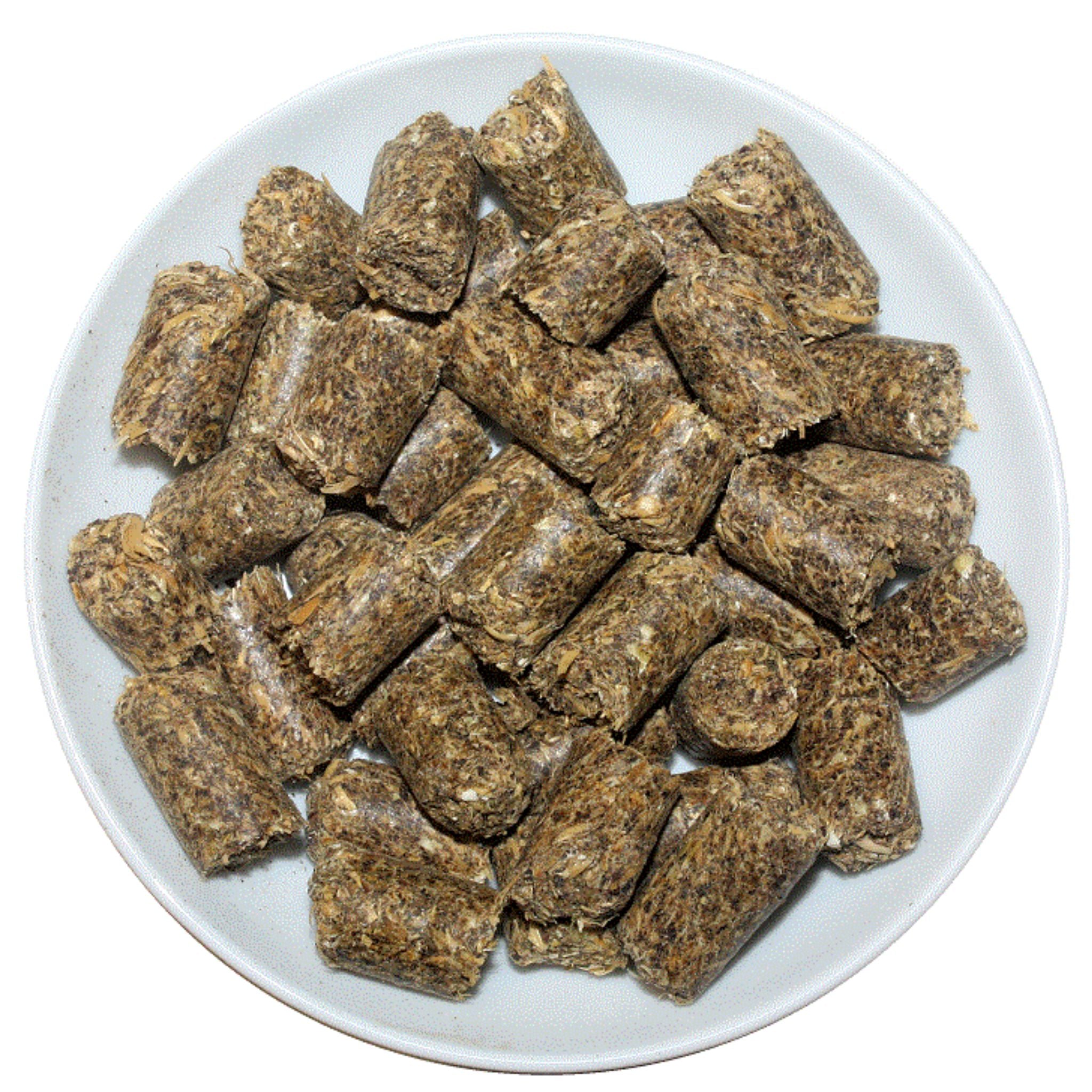


Wombaroo Kangaroo Pellets are a supplement for Australian herbivores — kangaroos, wallabies and wombats — fed alongside pasture, hay and native browse. The formulation reads as a deliberate correction of what captive macropods are often given: 22% crude fibre to keep them chewing, starch capped at 10% because cereal grains drive dental and gut problems, oxalate held to 750mg/kg for urinary tract health, and carotenoids with vitamin E for antioxidant support. Wombaroo's advice on converting an animal across is the part worth reading below — oats, muesli, fruit, vegetables and lucerne hay come out of the diet first, and older animals are much harder to shift than young ones. Hand-reared joeys can be weaned onto the pellets by soaking them in milk formula.
Key Features
- High in fibre: promotes chewing action and good digestive condition.
- Low starch: reduces dental and gut problems associated with cereal grain diets.
- High in antioxidants: to reduce oxidative stress and support the immune system.
- Low in oxalates: to assist urinary tract health.
Ingredients
Grass, plant fibre, cereal meal, soy protein, lysine, methionine, vegetable oils, carotenoids, vitamins A, B1, B2, B3, B5, B6, B9, B12, C, D3, E, K, biotin, calcium, phosphorus, potassium, sodium, magnesium, zinc, iron, manganese, copper, iodine, selenium.
Typical Analysis
| Protein | 13% |
| Fat | 5% |
| Crude Fibre | 22% |
| Neutral Detergent Fibre (NDF) | 40% |
| Starch (max) | 10% |
| Vitamin E | 250mg/kg |
| Total Oxalate (max) | 750mg/kg |
| Total Carotenoids | 25mg/kg |
| Metabolisable Energy | 9.0 MJ/kg |
Directions
Feed Wombaroo Kangaroo Pellets as a supplement to pasture, hay and native browse. Water intake may increase when feeding pellets, so always ensure fresh water is available. Introduce pellets gradually into the diet to avoid sudden digestive upset.
Feed Guidelines
Feed rate will depend on body weight, body condition and the quality of other foods consumed. The guidelines assume that Wombaroo Kangaroo Pellets make up 15% of the total dry matter intake of the diet. The remainder should consist of grass, hay, pasture and browse, varying with the individual species' requirements. 1 metric cup is approximately 120g of pellets.
Converting to Kangaroo Pellets
Captive herbivores may become accustomed to eating large amounts of unhealthy foods such as cereals (oats, muesli mixes, commercial “macropod” pellets), fruit, vegetables or lucerne hay. When converting over to Wombaroo Kangaroo Pellets, these foods should be removed from the diet, which helps encourage intake of the pellets.
When converting animals onto pellets it is preferable that:
- Animals are in good body condition and housed in a low-stress environment.
- Weather conditions are mild (avoid extremes of heat or cold).
- Other non-natural feed items are removed, such as fruit, vegetables, muesli or lucerne hay.
- Plenty of fresh water is provided.
Older animals tend to become set in their ways and can be difficult to convert onto new food items. Young animals can be weaned onto pellets more easily.
Pellets as a Weaning Food
Hand-reared joeys may be weaned onto pellets by soaking them in milk formula, initially making a sloppy mash. Gradually reduce the quantity of liquid as the joey weans onto the solid diet.


