
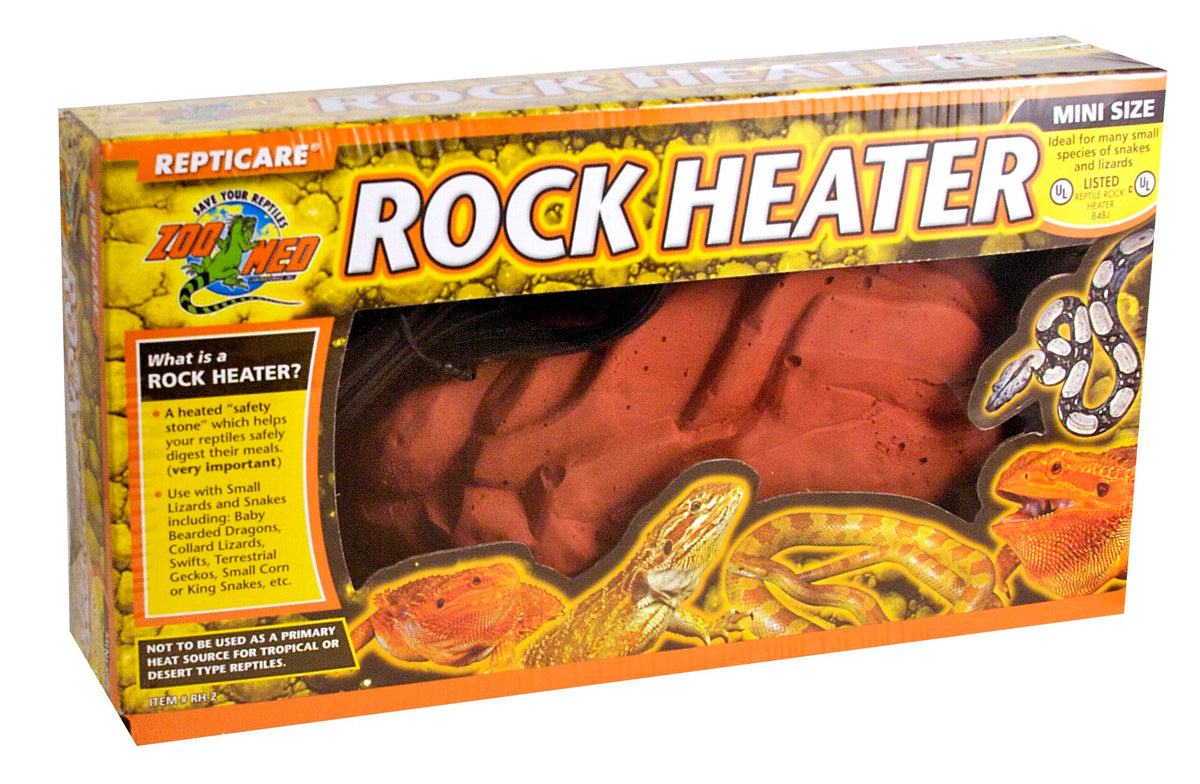
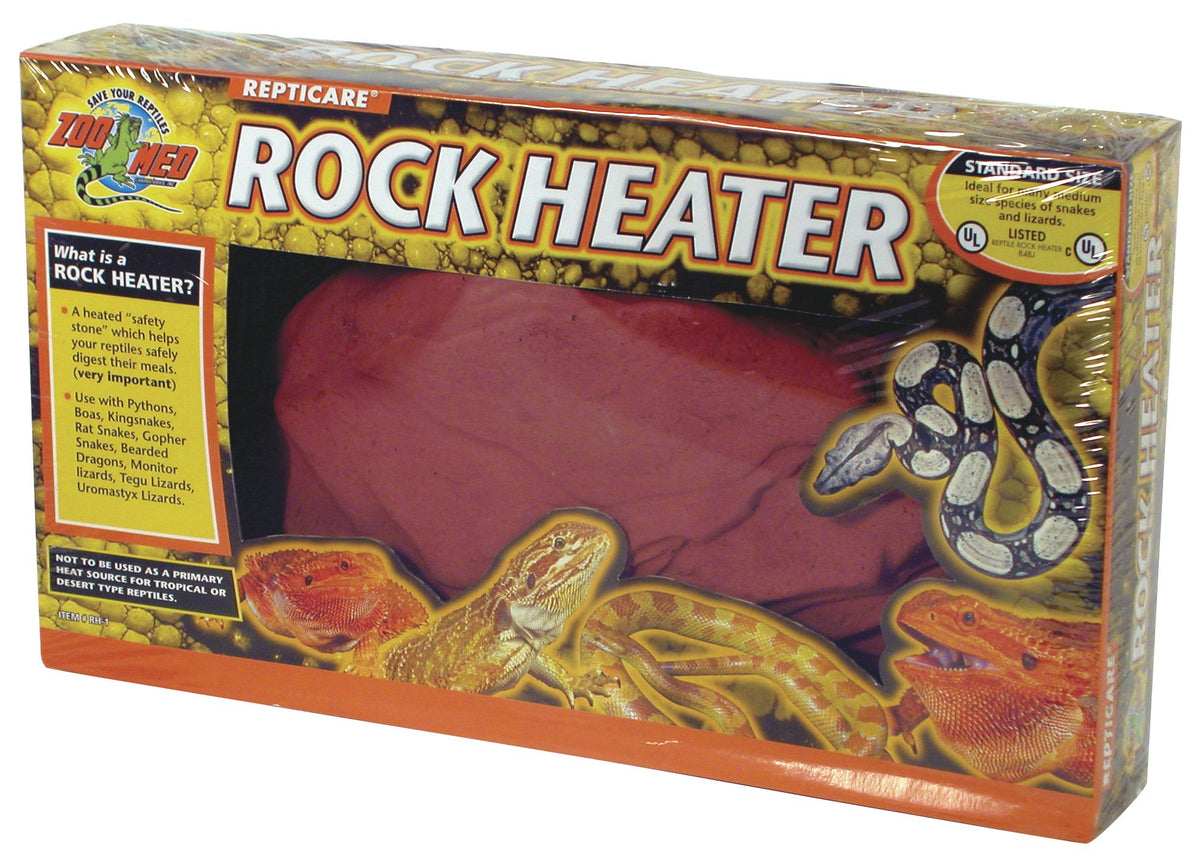
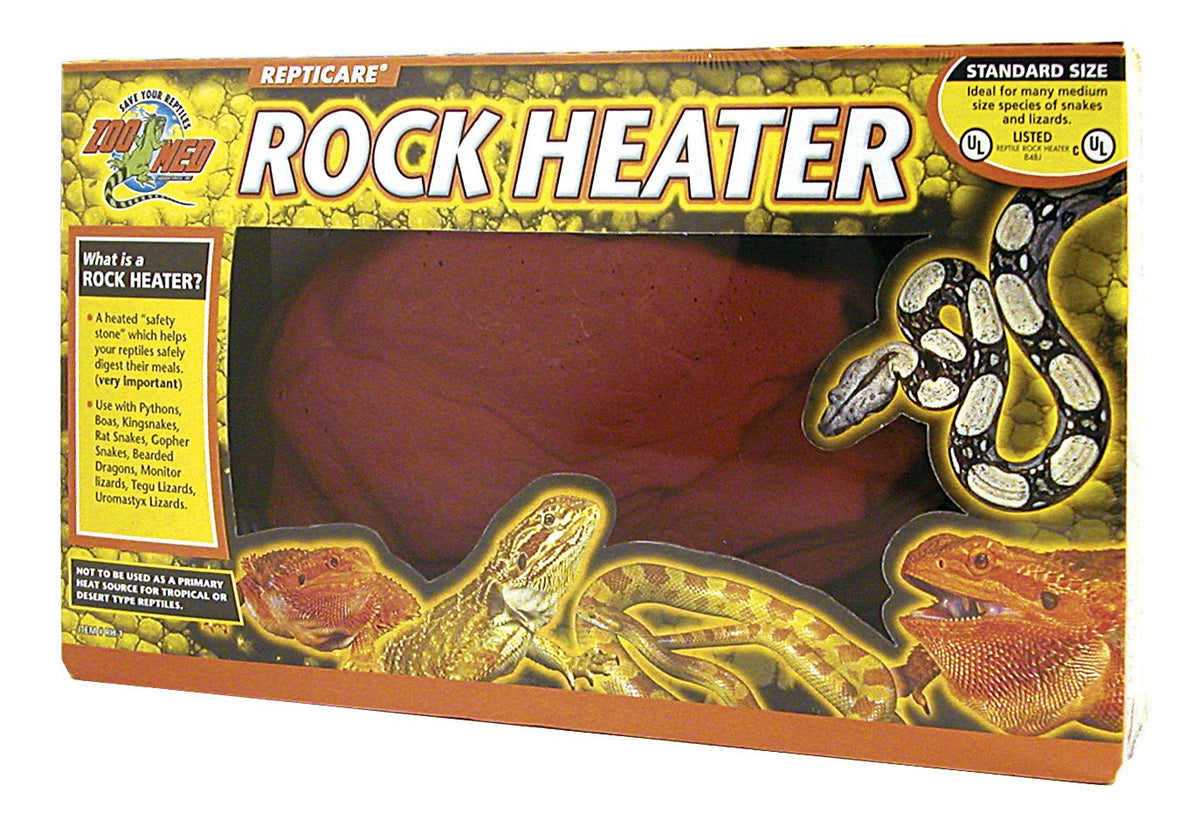


A heated artificial rock with the element encapsulated inside a hydrated-rock body, sold as a supplementary belly-heat source for small reptiles. Before you buy it, read the next section — Zoo Med's own instructions place real limits on how this product should be used, and hot rocks in general have a documented burn history that we would rather you knew about than found out about.
How it must be used
- Never as the sole heat source. This is Zoo Med's own instruction. If your animal sits on it constantly, the enclosure is too cold and needs an overhead heat source as well.
- Never cover or bury it under substrate, moss or anything else.
- Do not put a basking lamp directly above it — the two heat sources compound.
- Run it through a thermostat or dimmer. There is no internal temperature control.
Why the caution
Contact heat sources warm only the skin they touch, and a reptile's circulation cannot carry that heat away from the belly fast enough. Reptiles also detect sudden temperature change far better than a surface warming slowly, so an animal can stay put past the point where damage begins — particularly a cold animal, whose circulation is already slow. That is the mechanism behind the burns hot rocks are known for, and it is why the safe configuration is always supplementary heat under thermostat control, with a proper overhead basking source doing the real work.
If you are setting up from scratch, a thermostatted under-tank heater beneath a warm hide, or a basking lamp over a flat stone, gives the same belly warmth with less risk.
Features
- Encapsulated element — Zoo Med's design intent is even warmth without hot spots.
- Three sizes — Mini, Medium and Giant.
- Washable hydrated-rock surface.
More in Reptile Heating & Lighting.