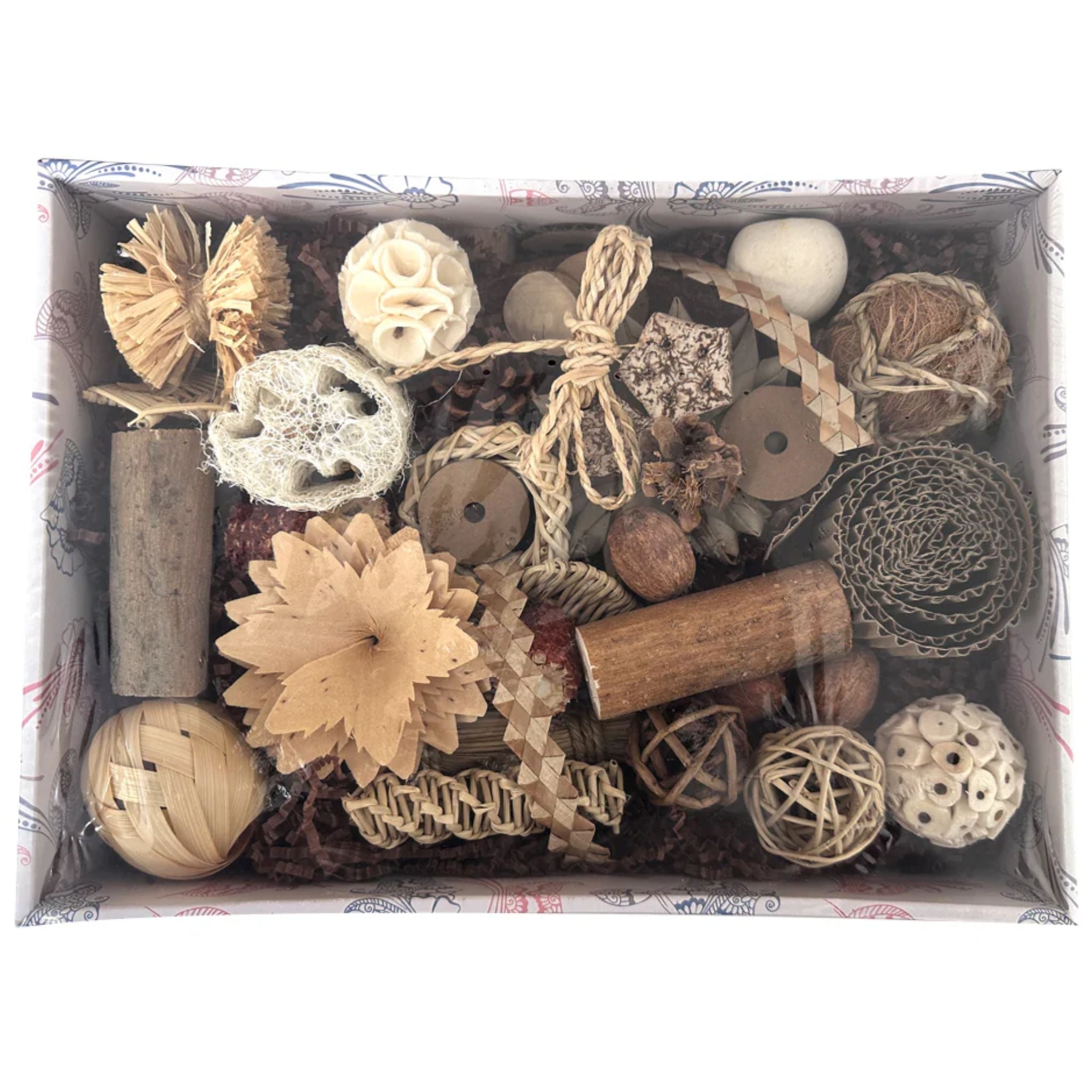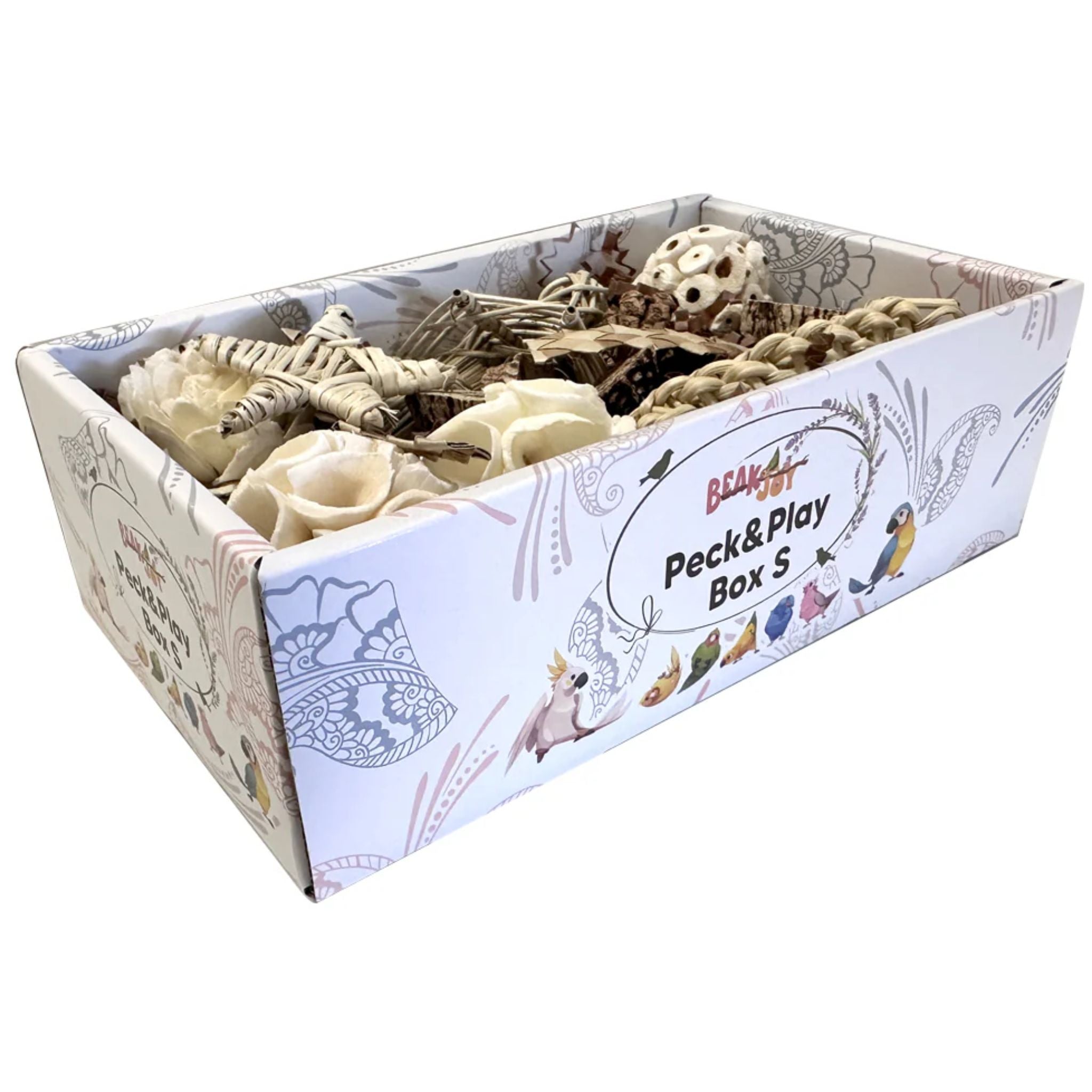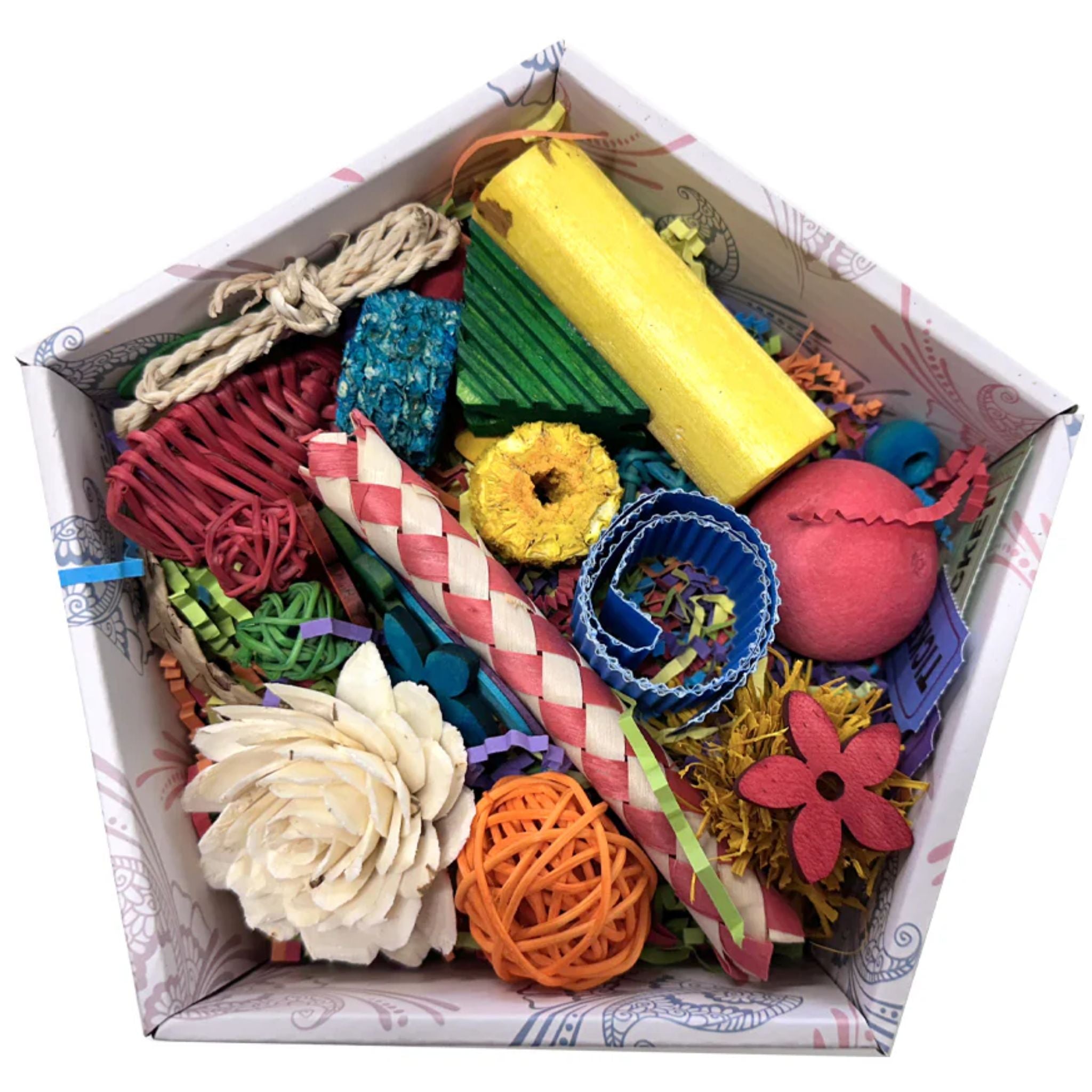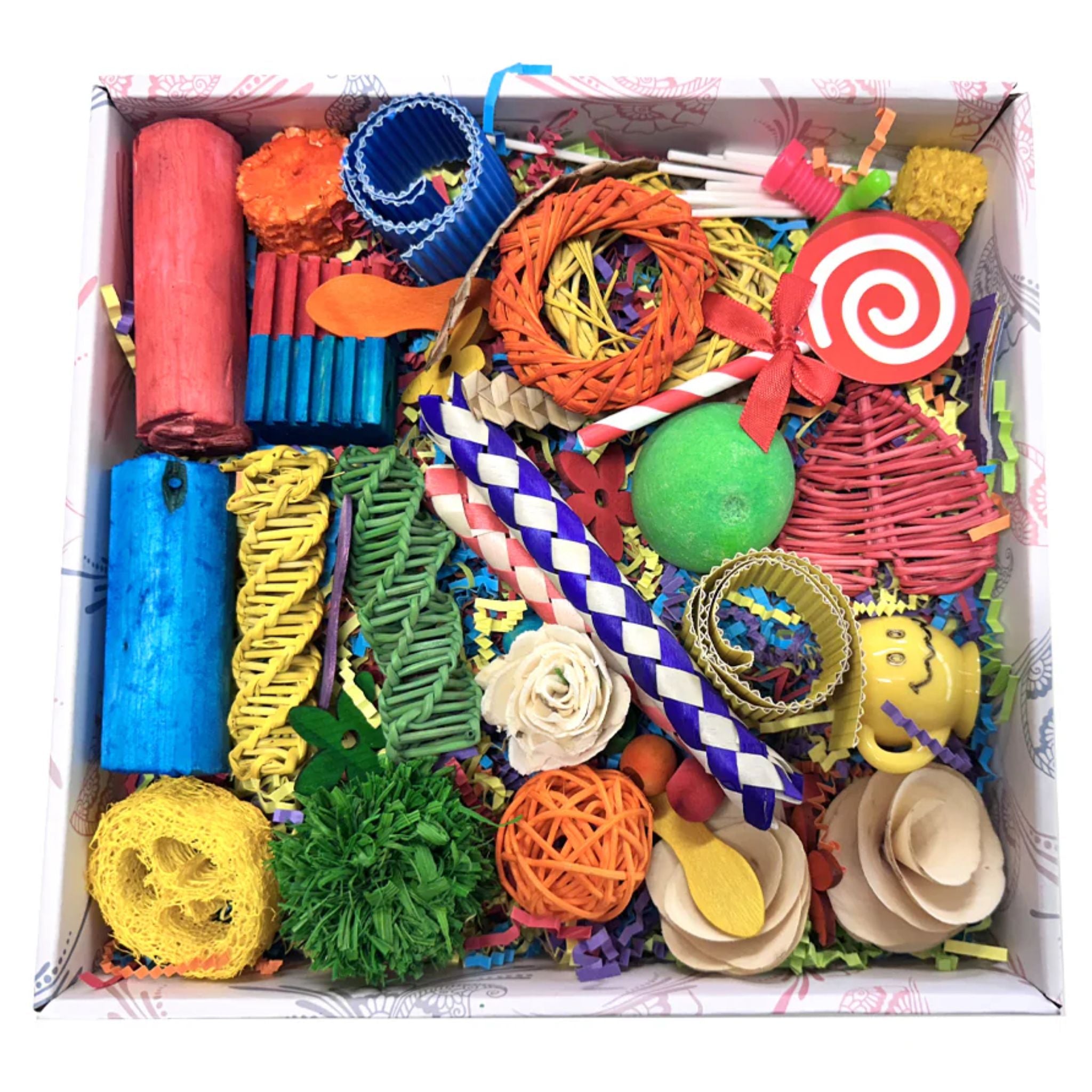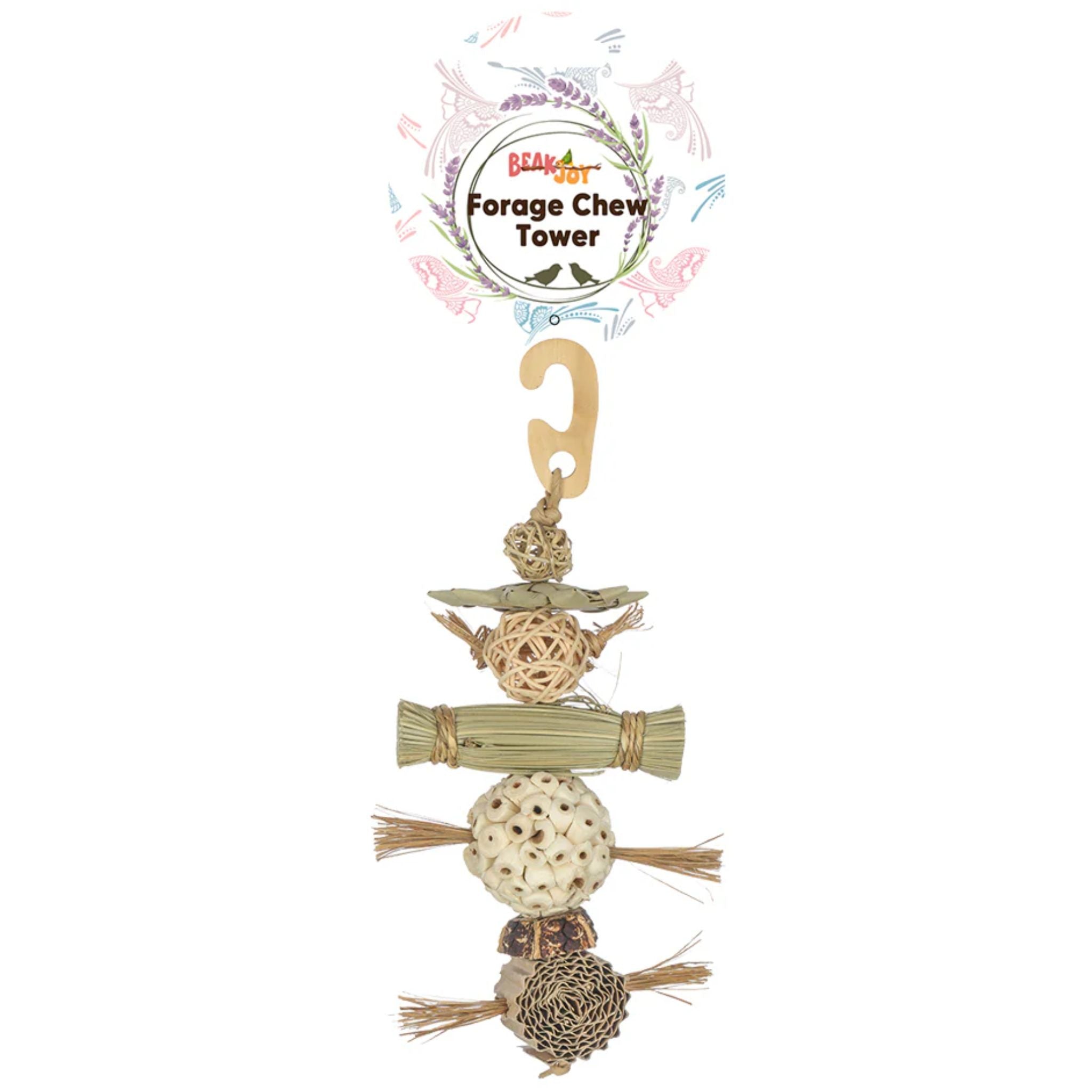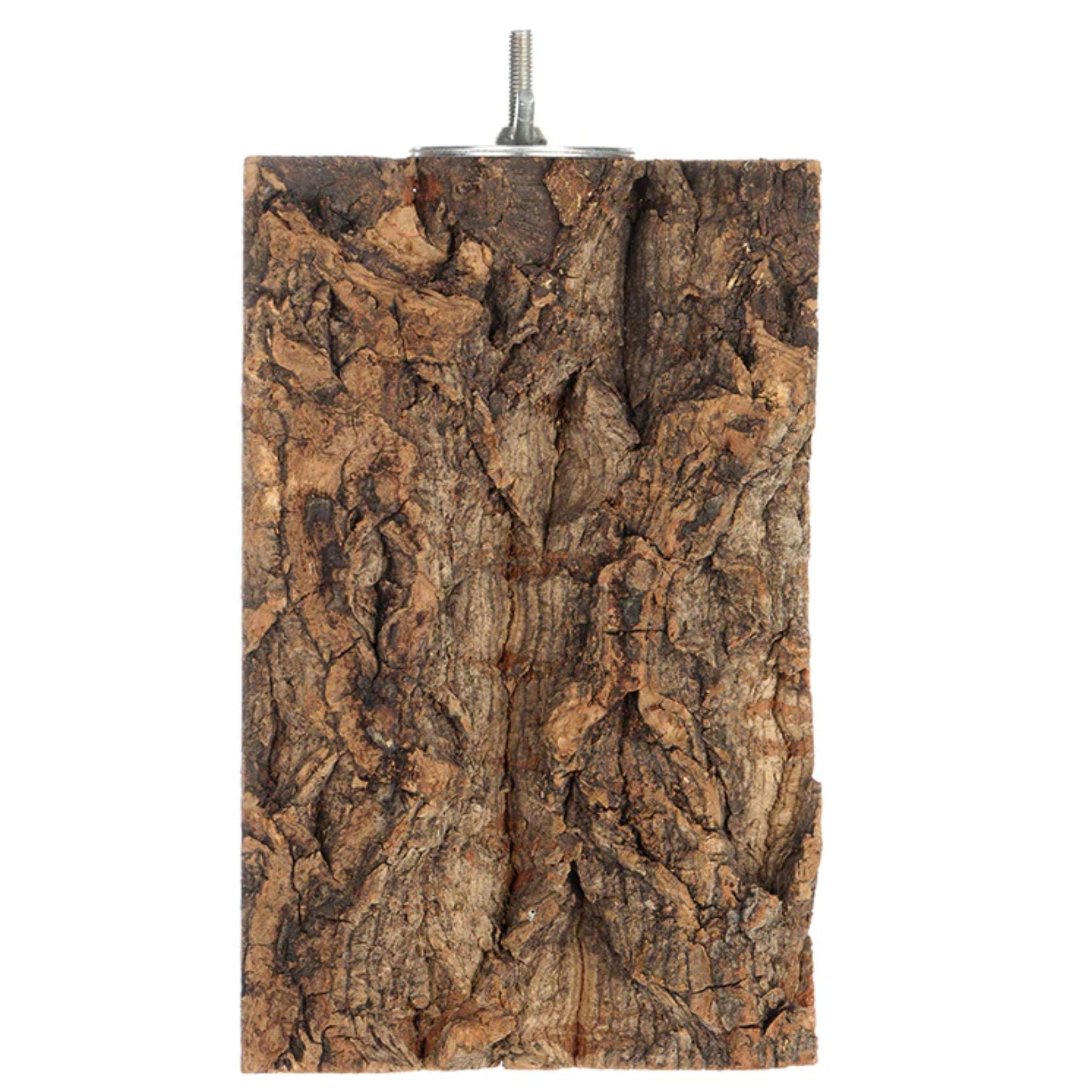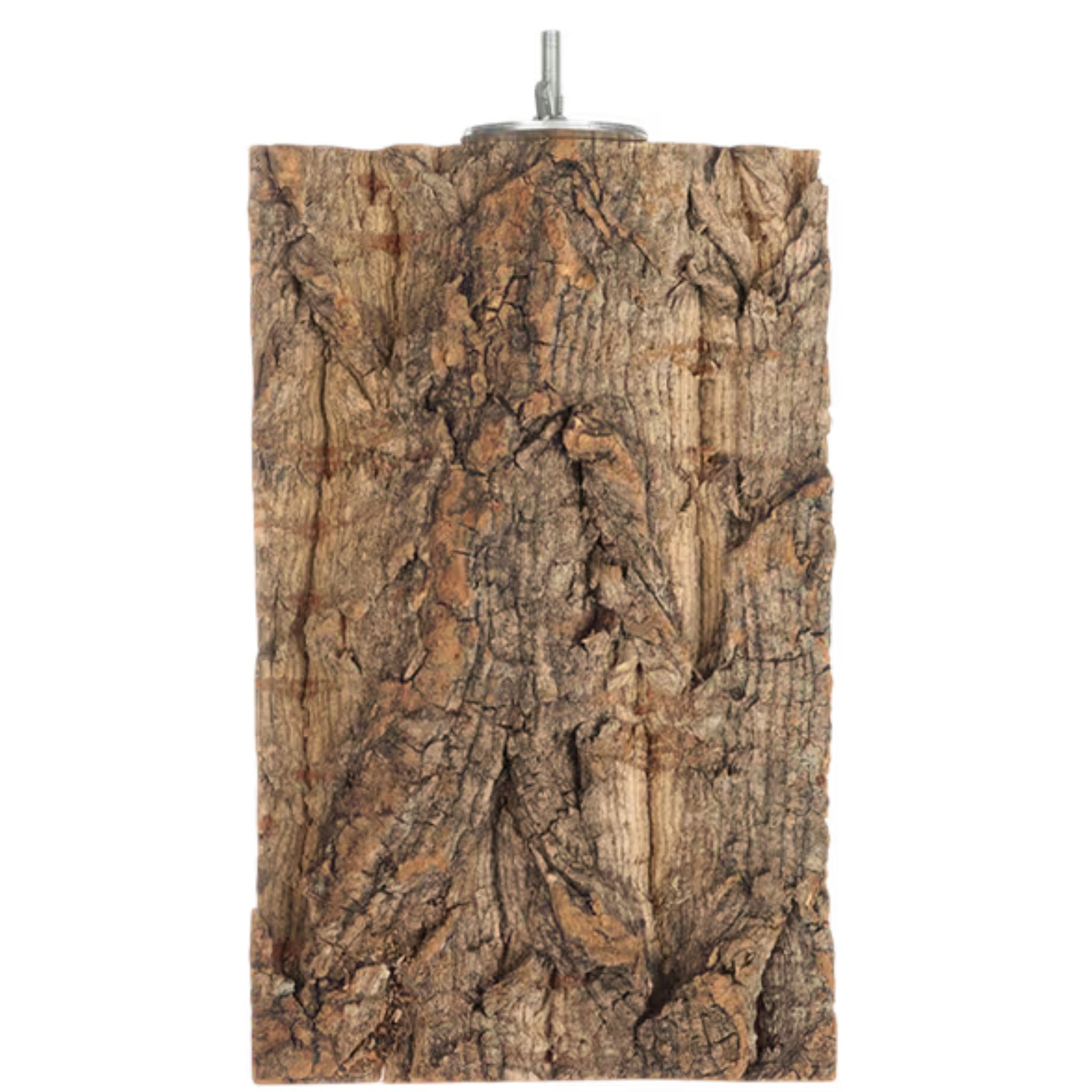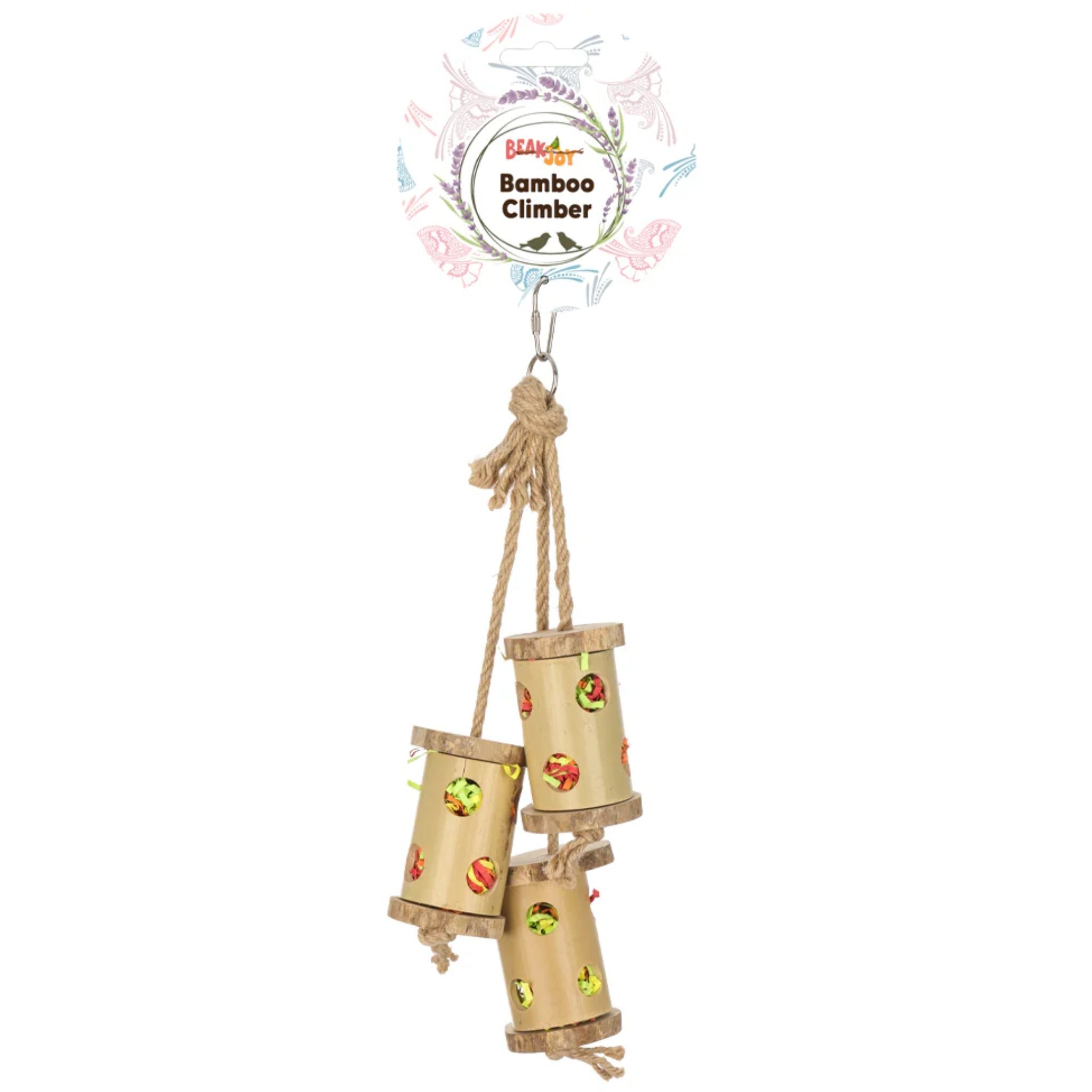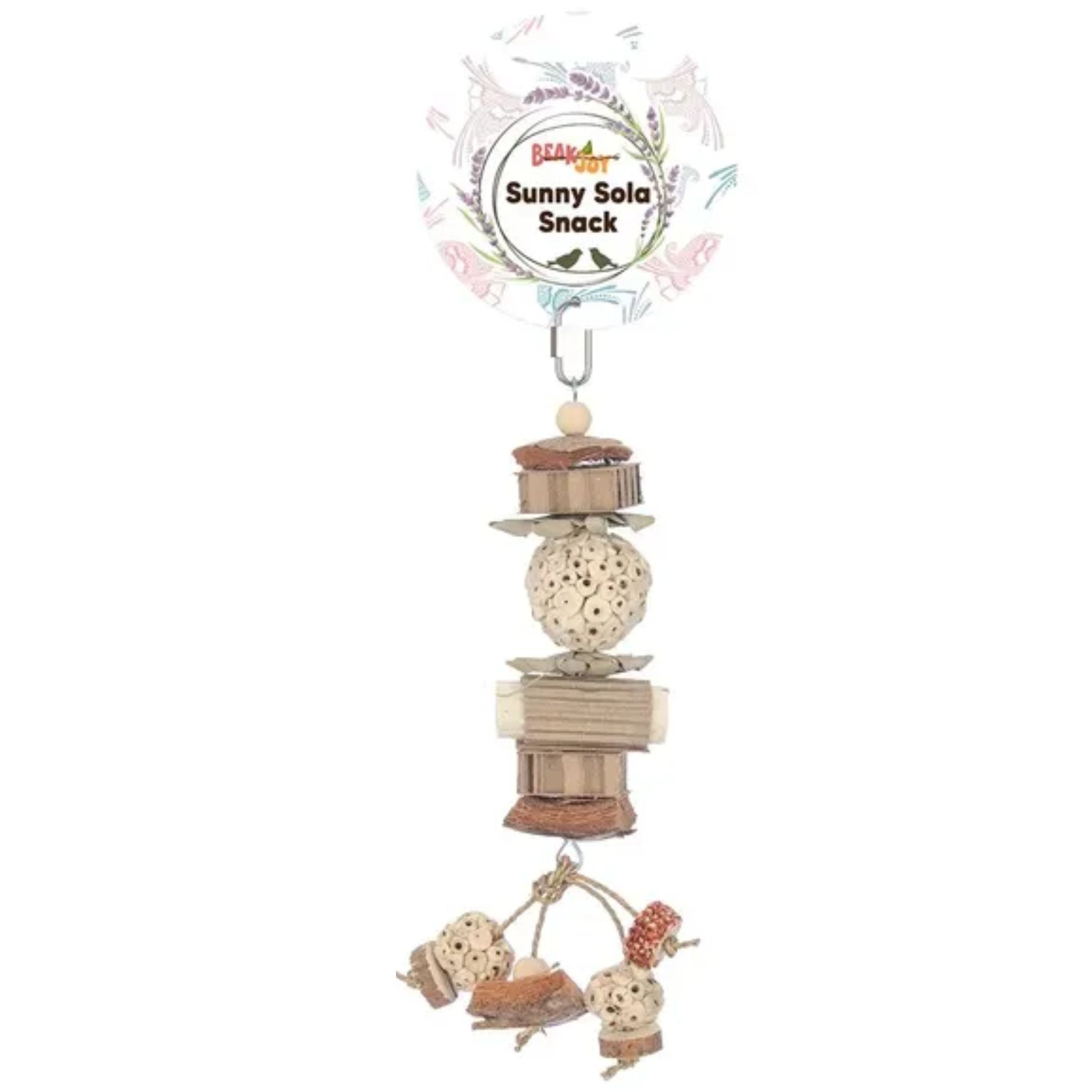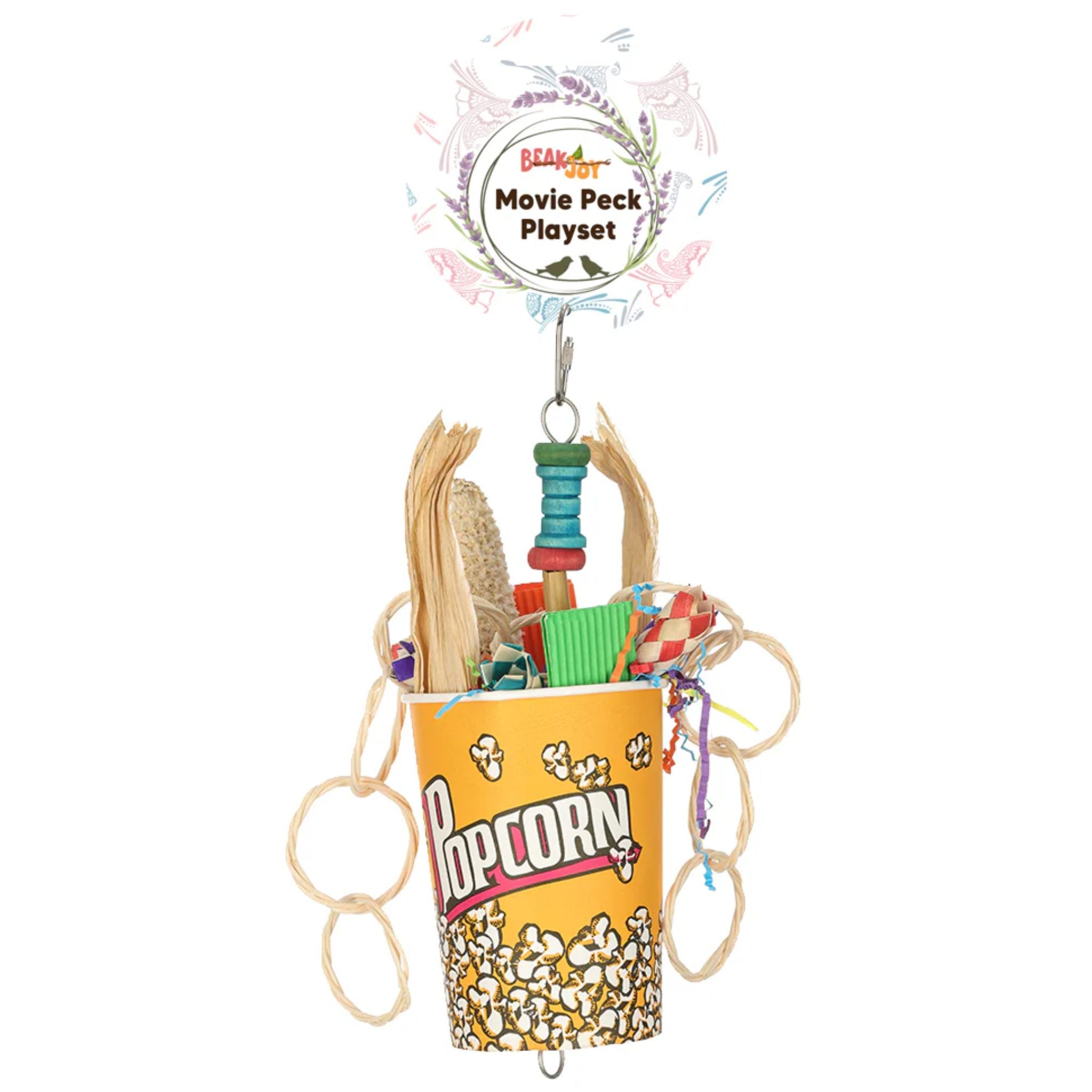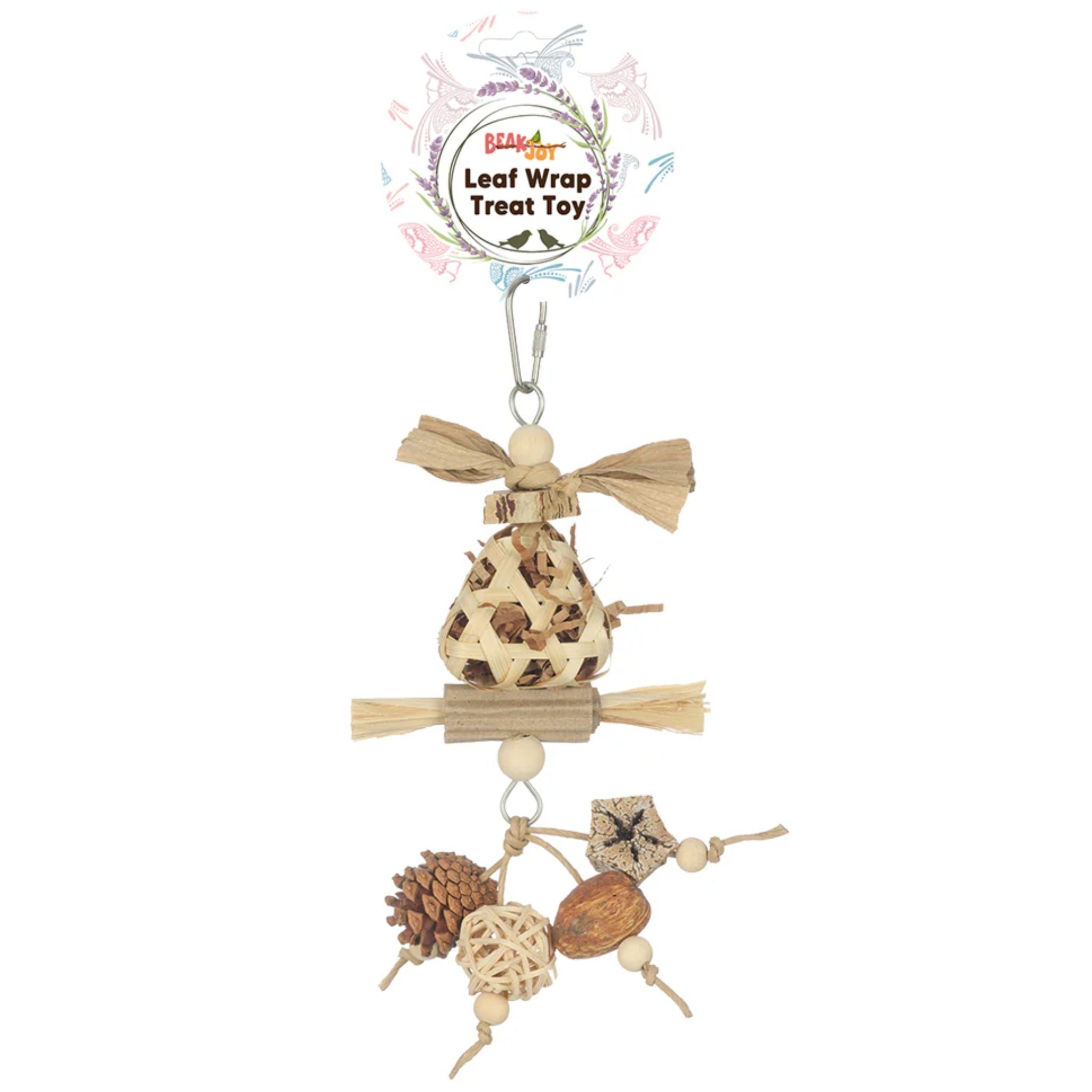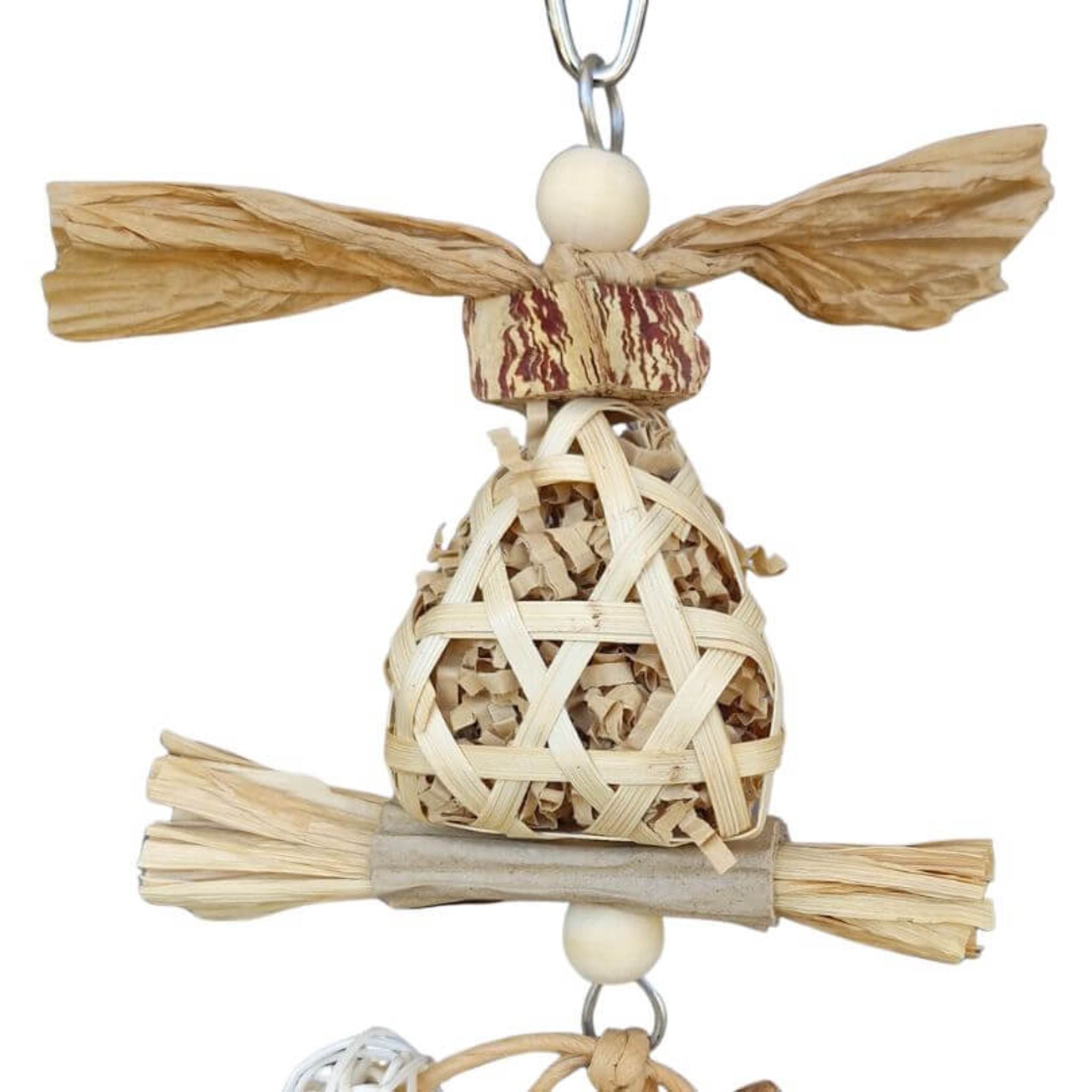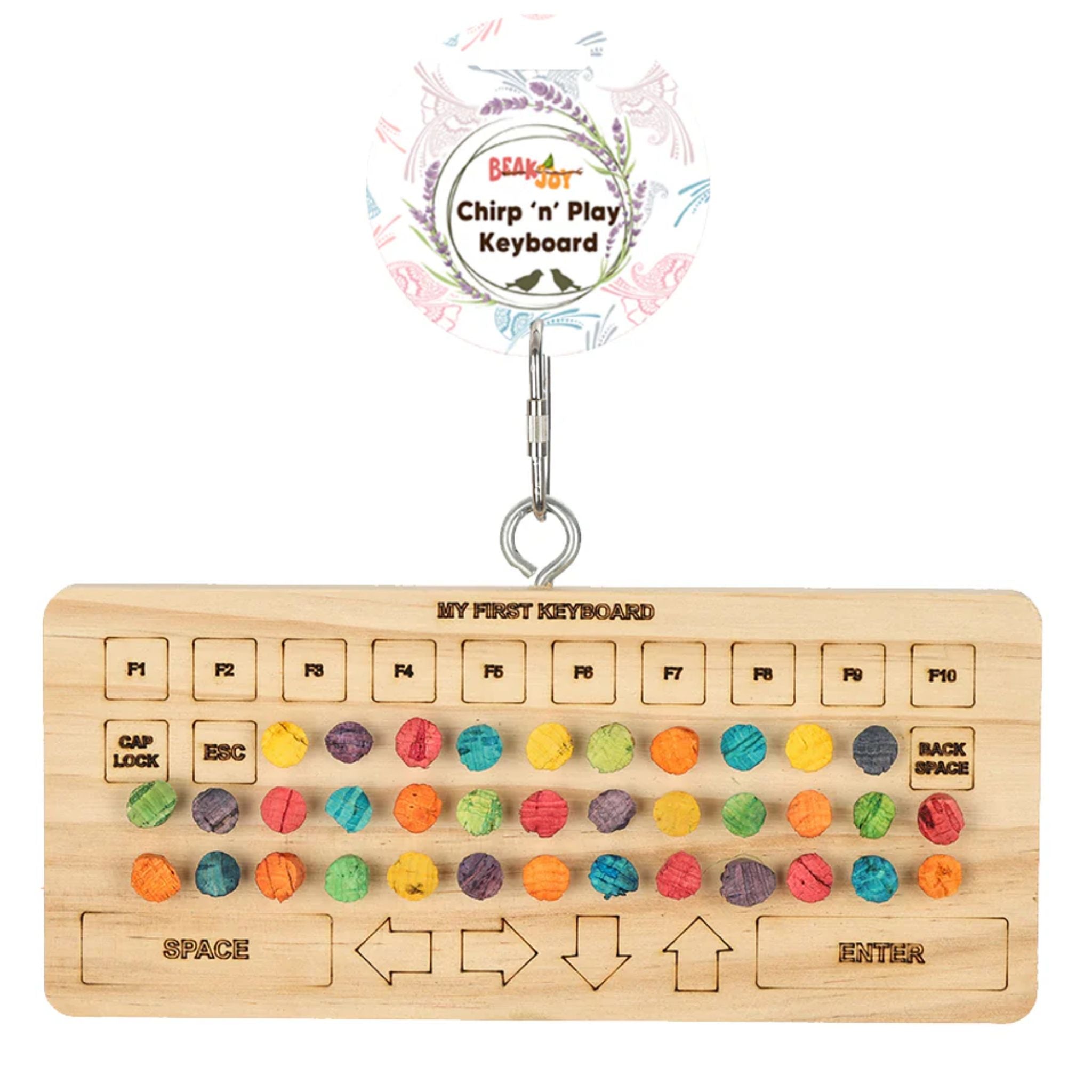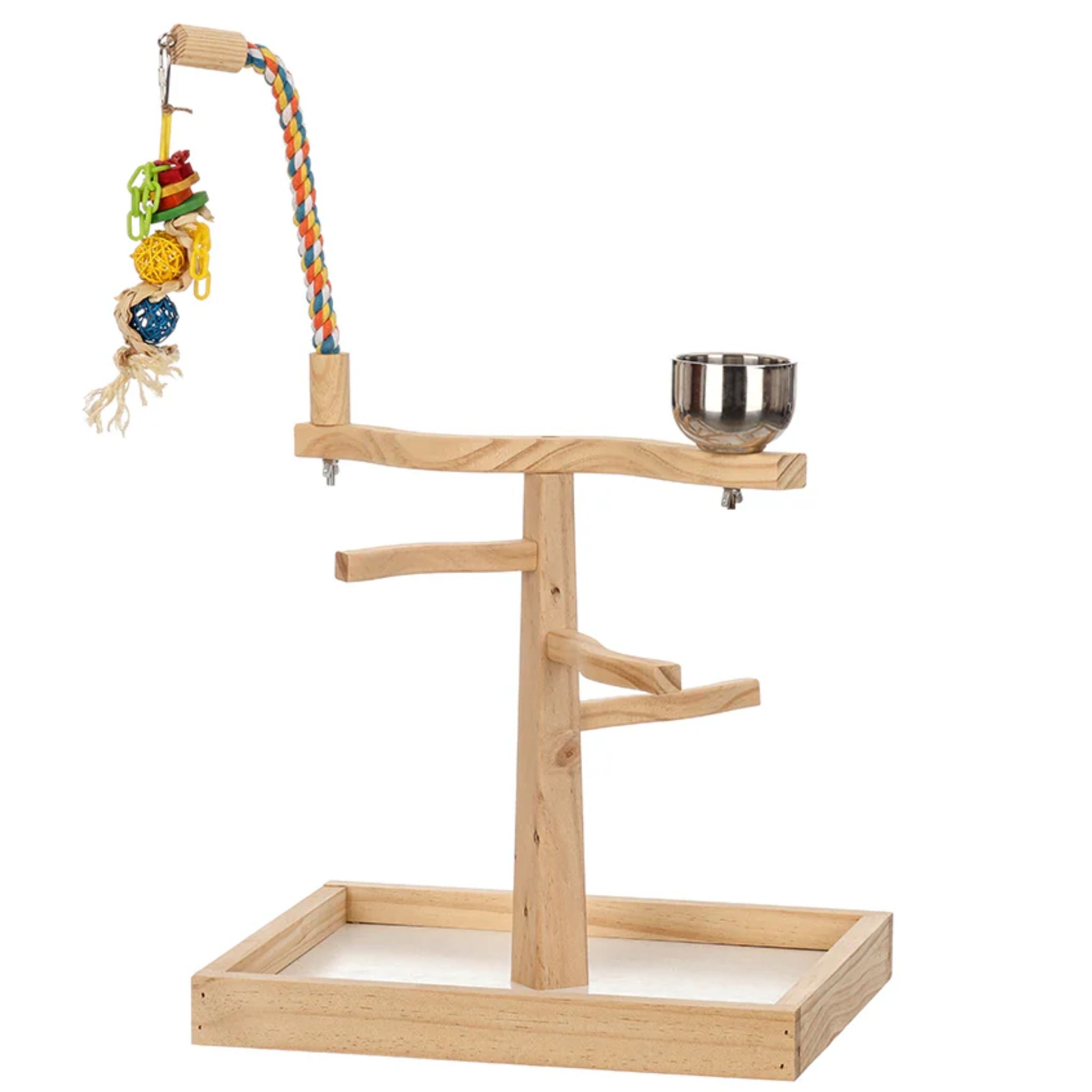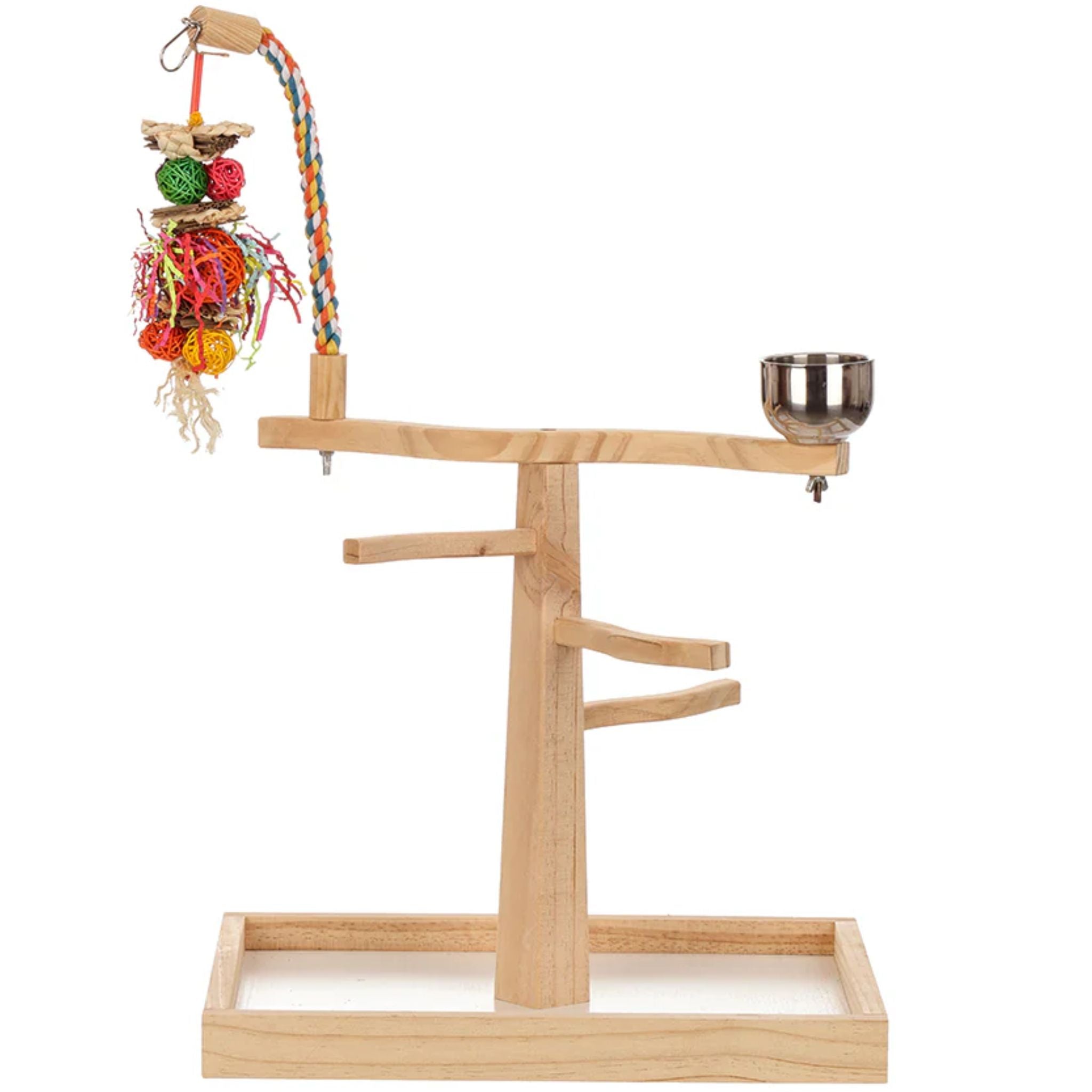
Beak Joy is a natural-materials bird toy brand, and all 19 Beak Joy products in this collection are listed as bird toys: foraging puzzles, chew towers, climbing pieces, perches and multi-part play gyms built from java wood, apple wood, cork bark, bamboo, seagrass, sola and pinecone.
Foraging, chewing and climbing
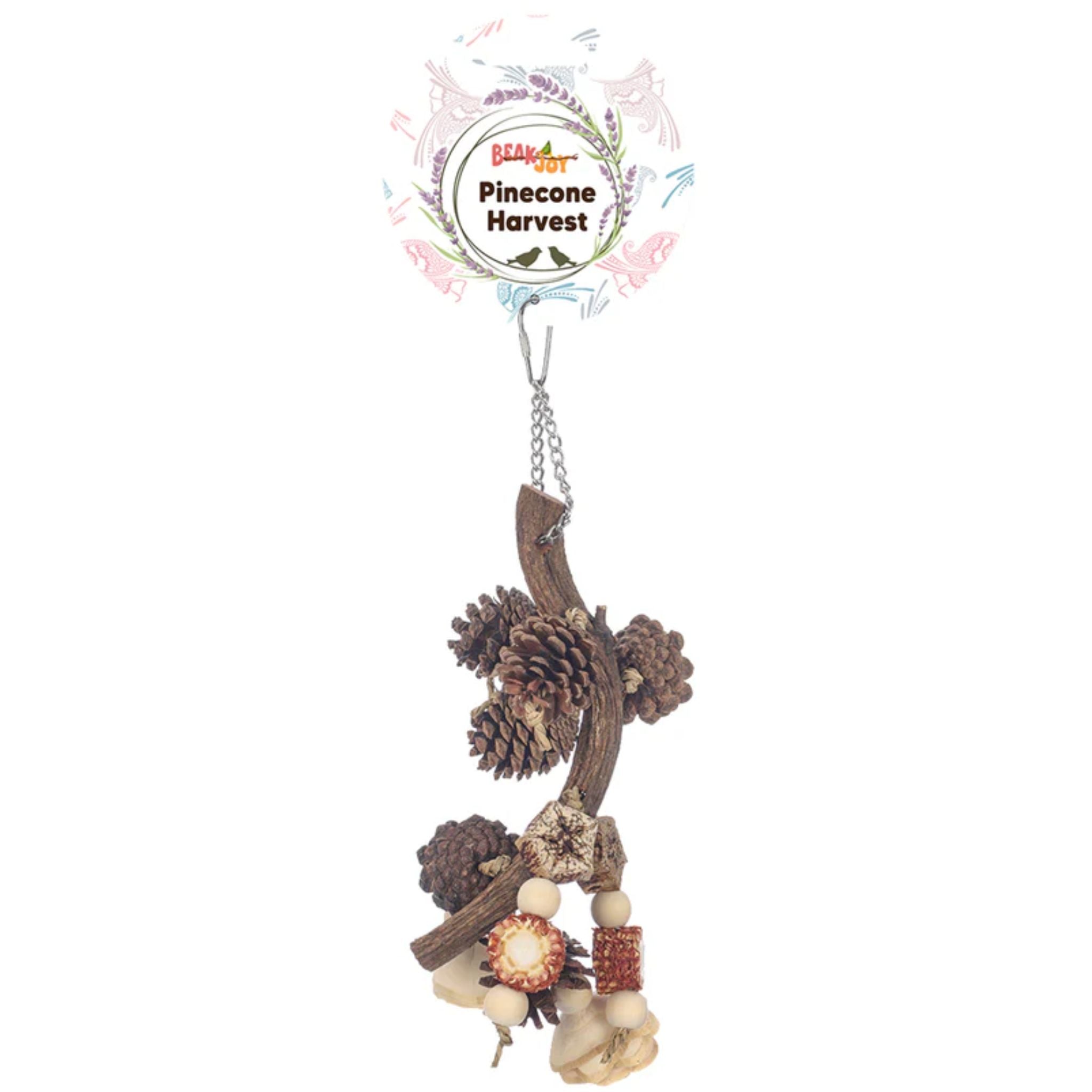
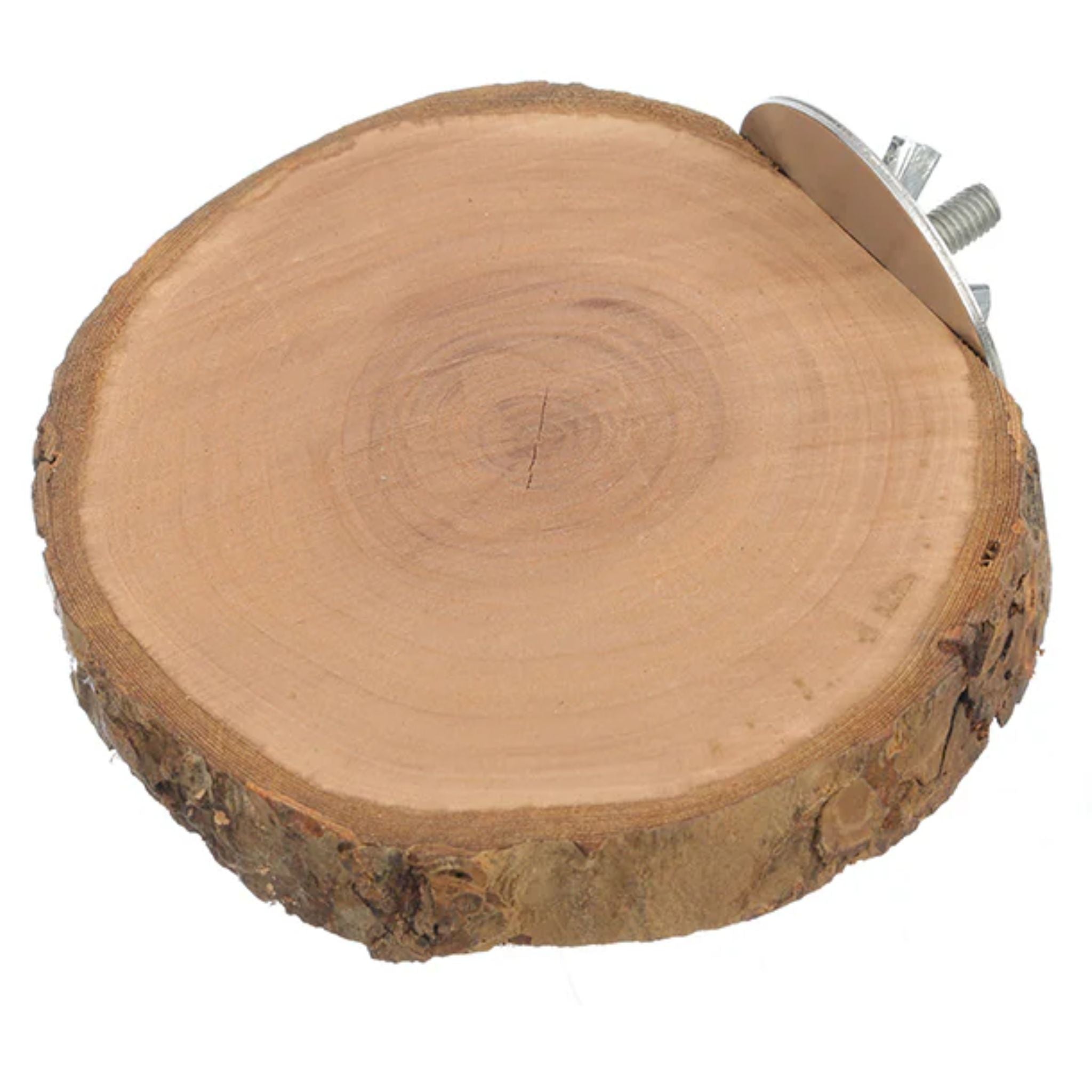
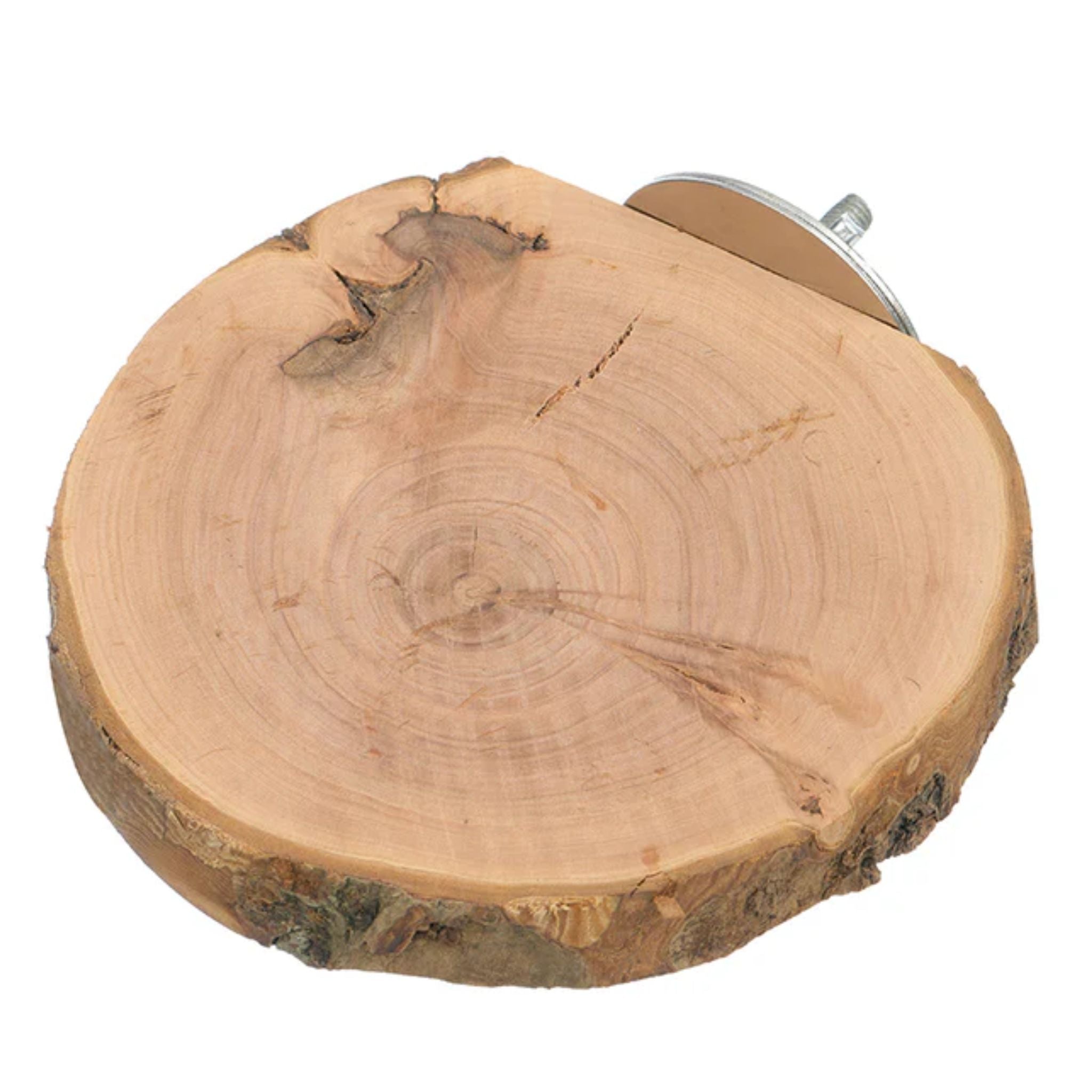
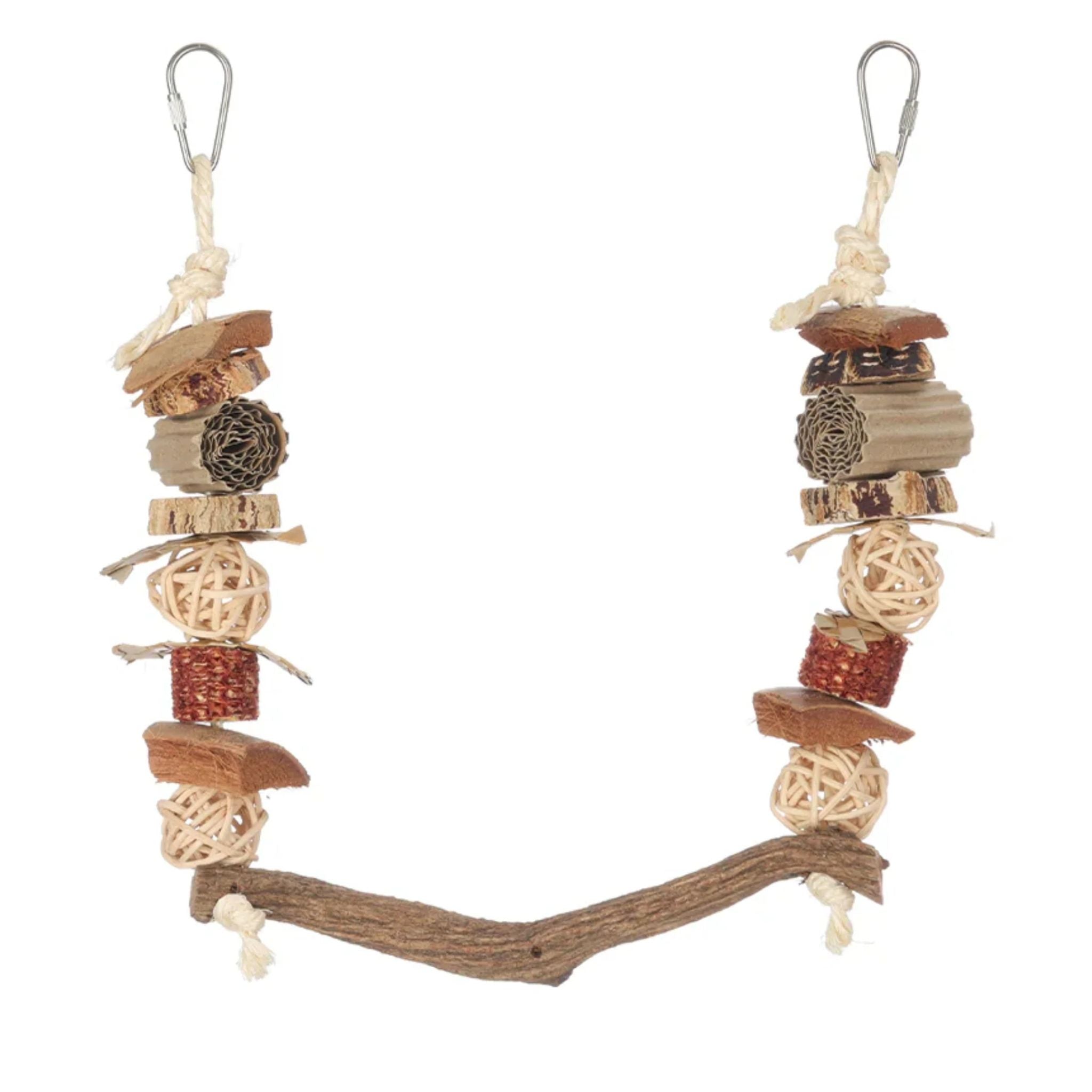
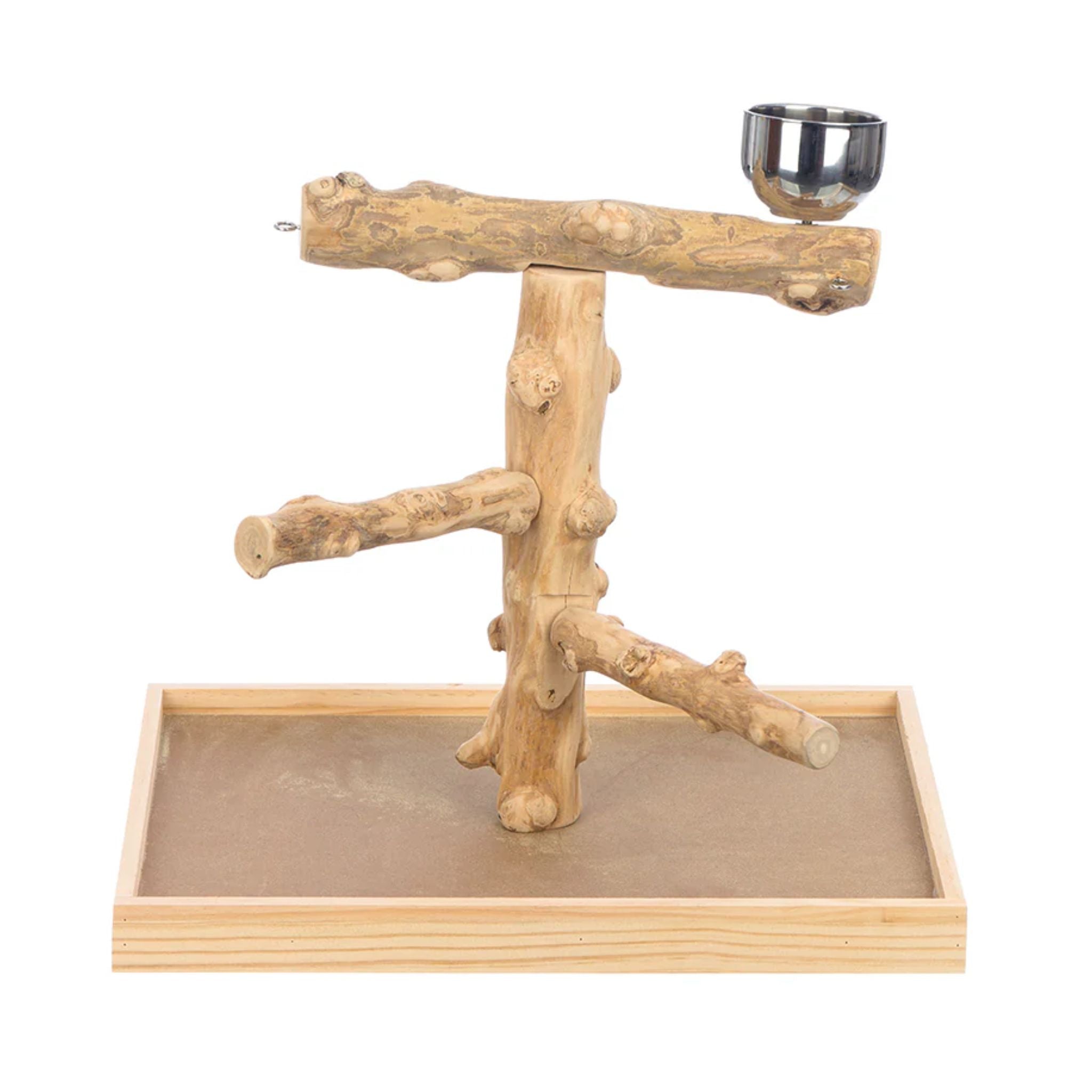
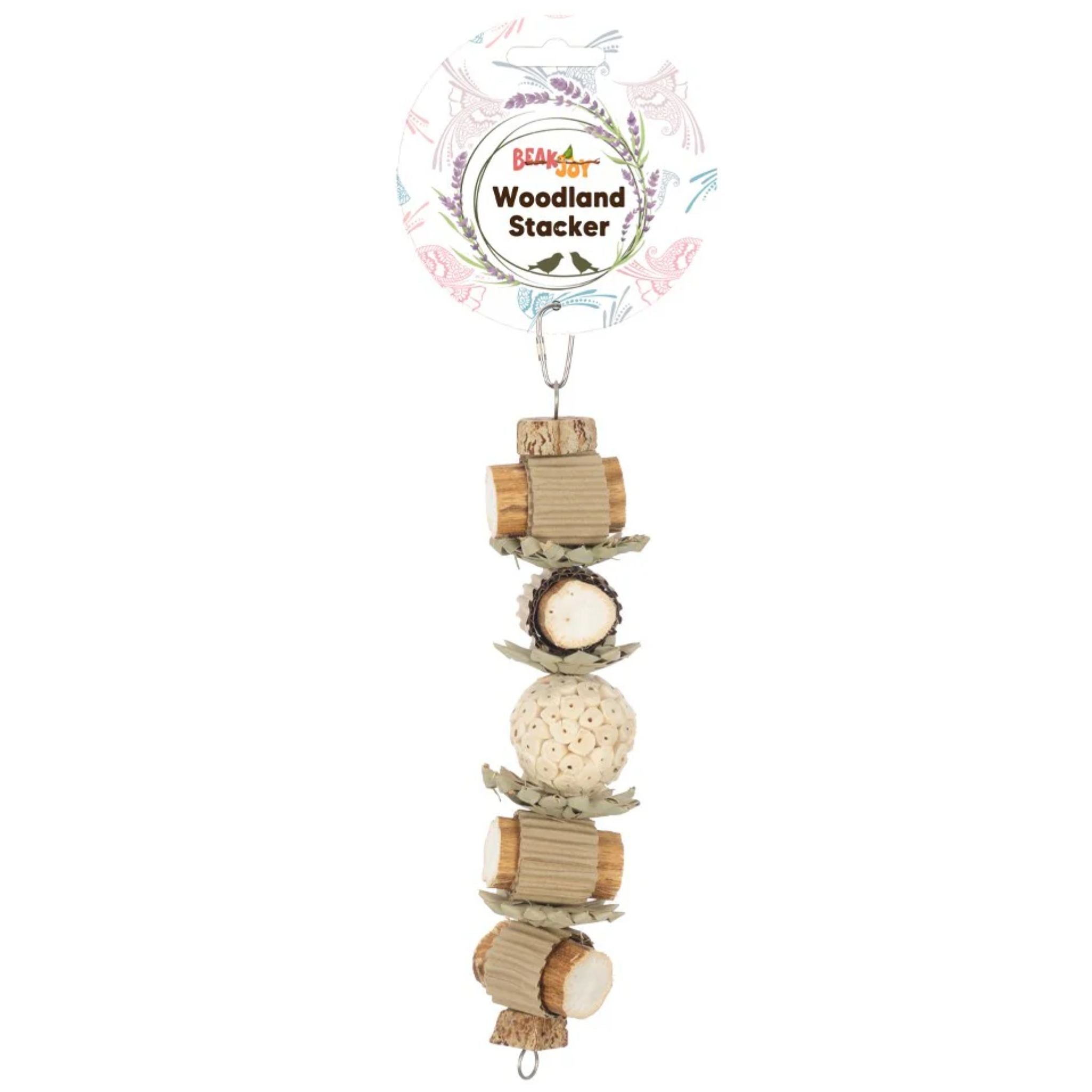
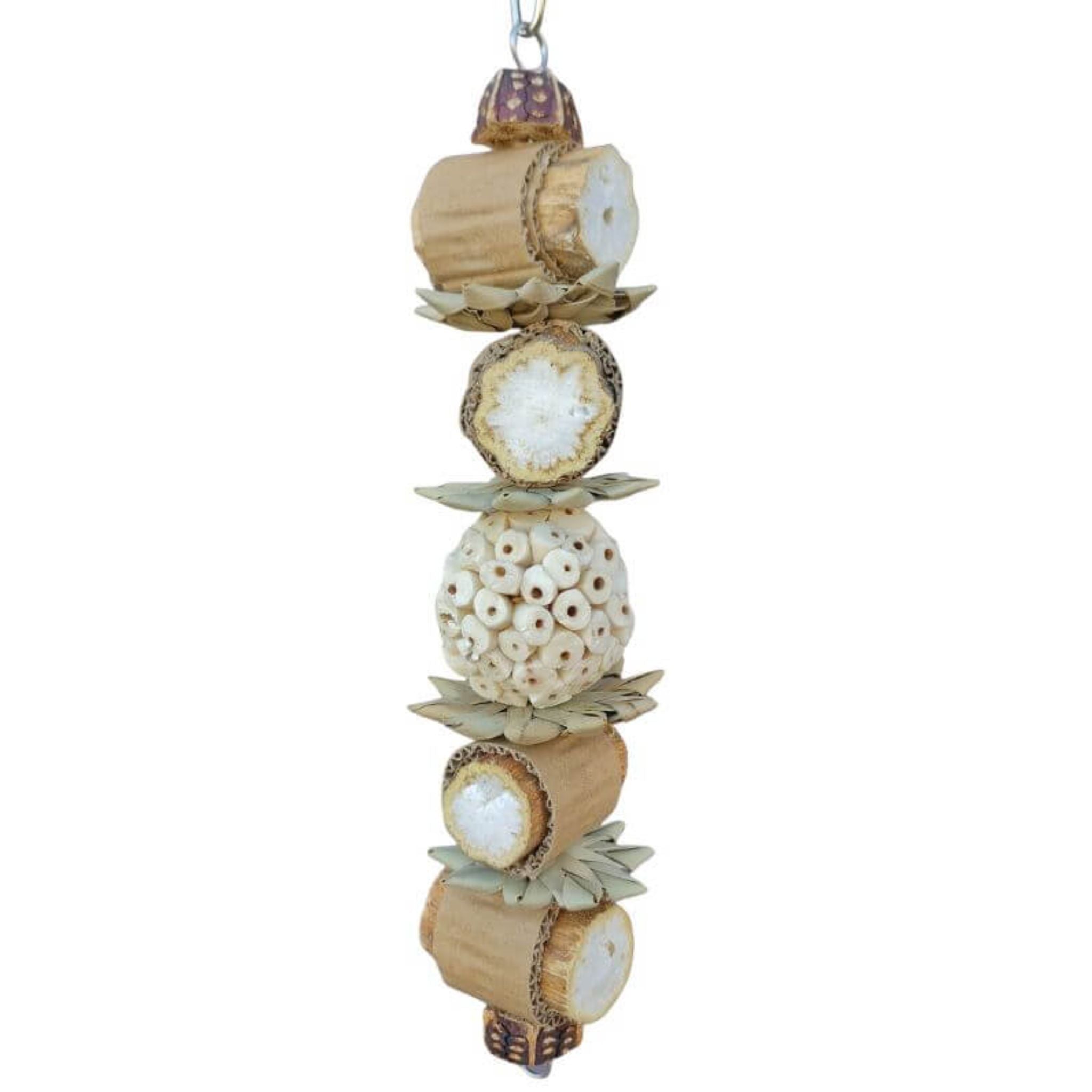
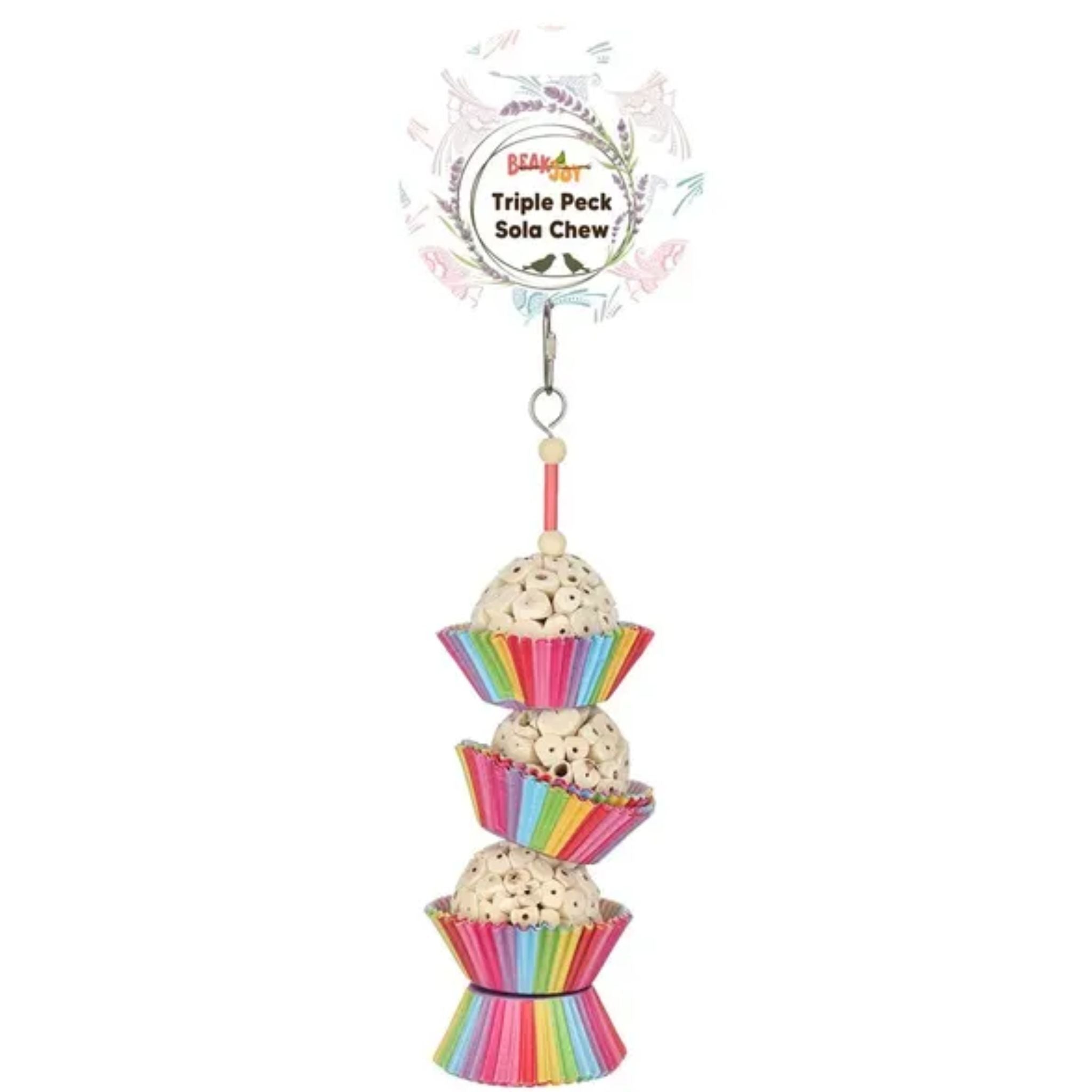
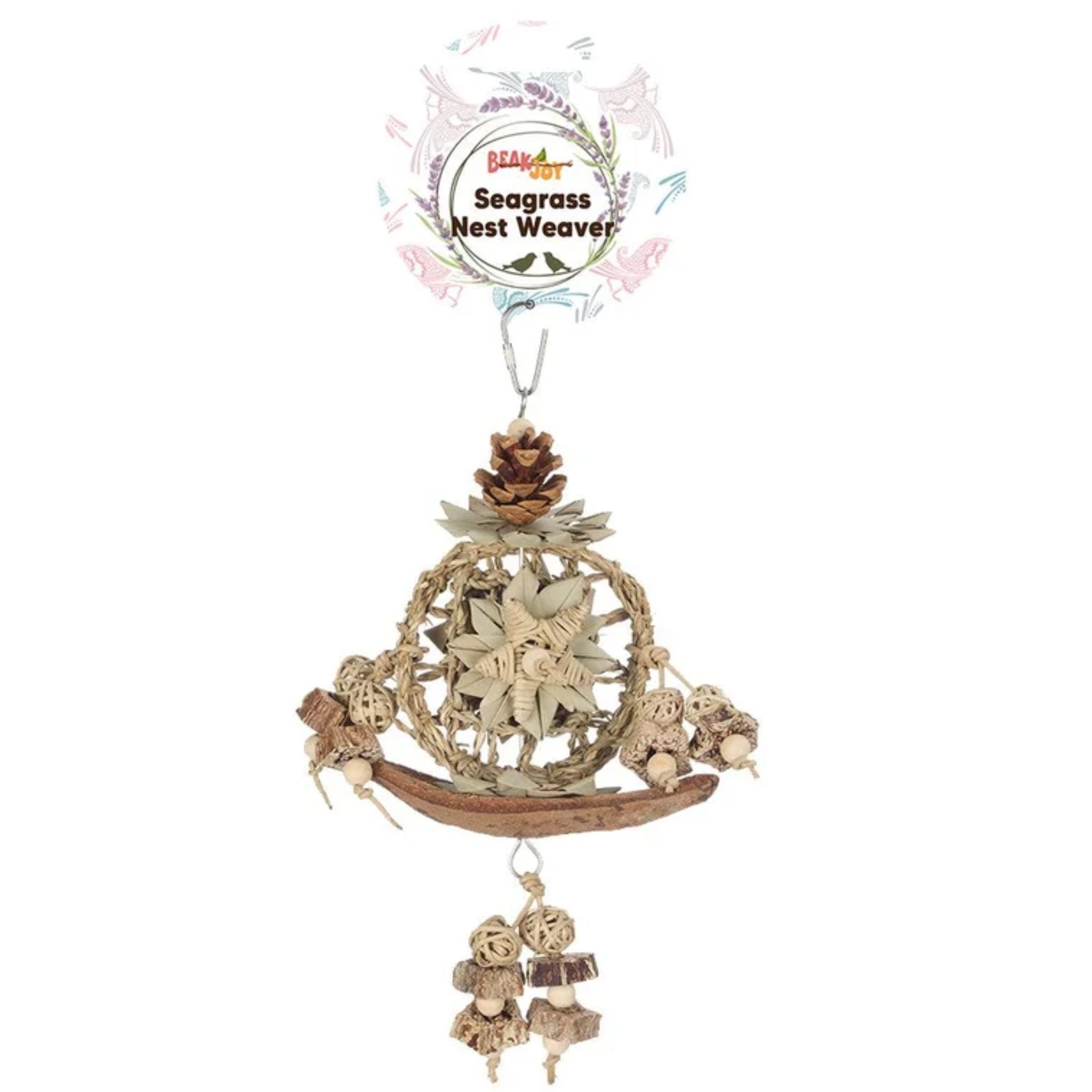
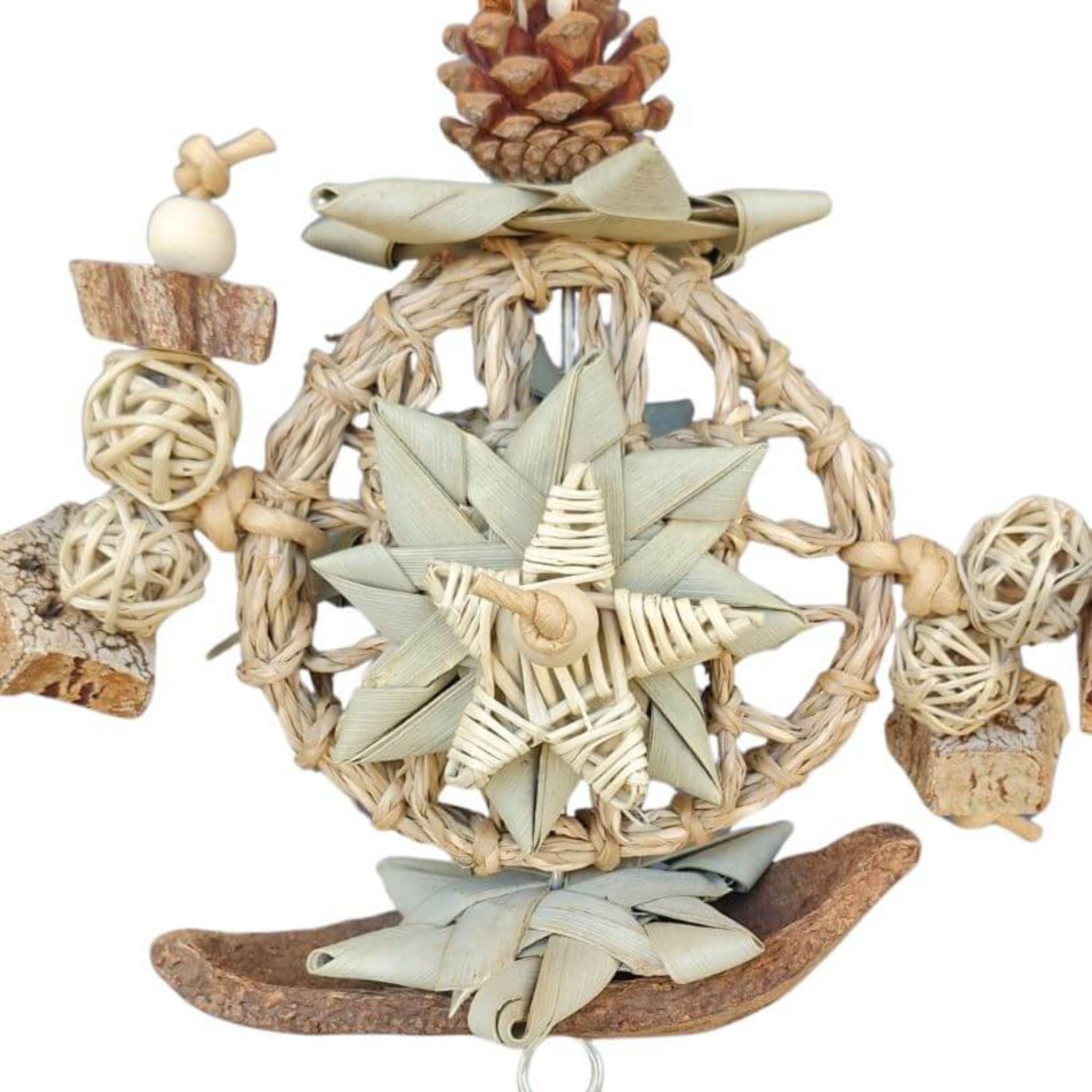
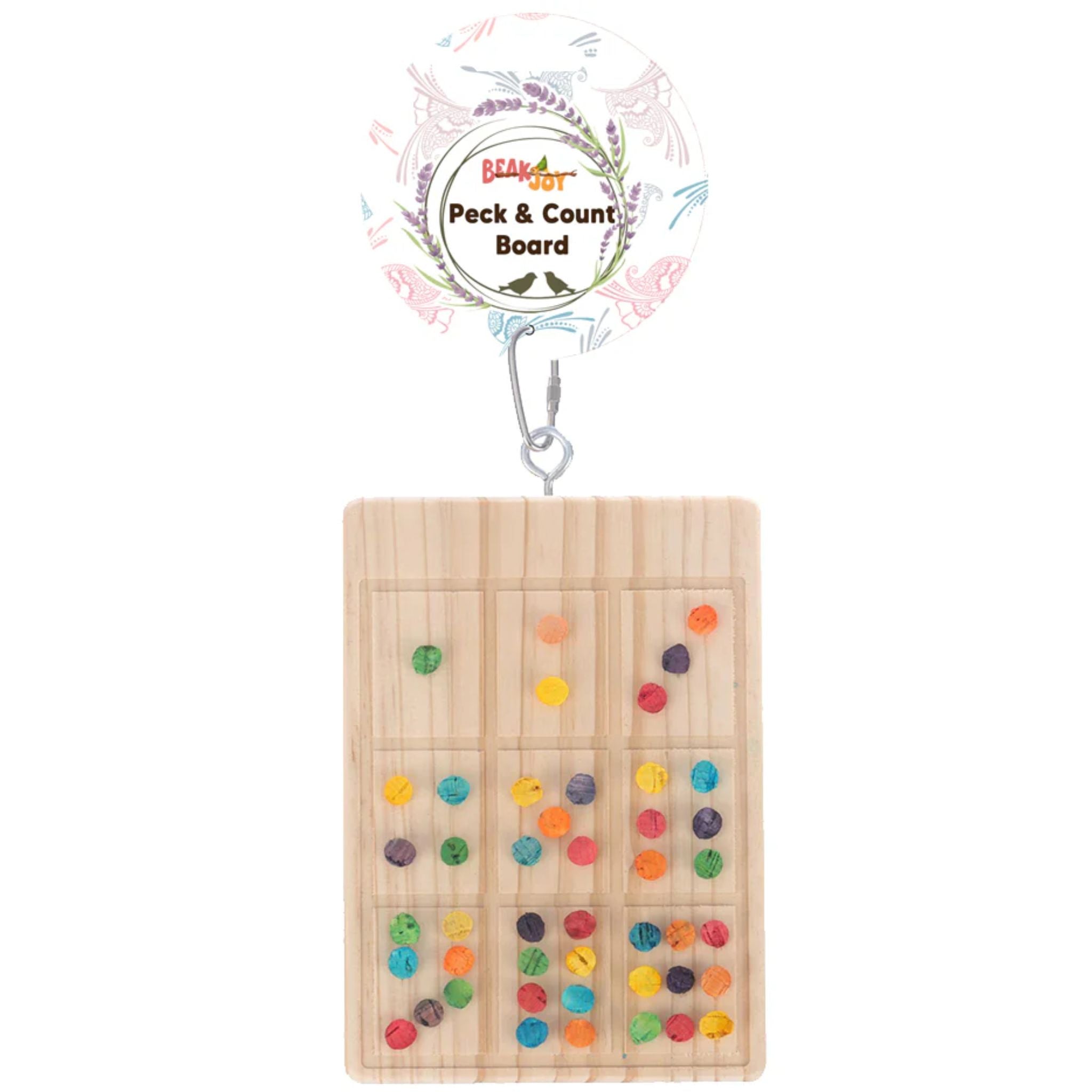
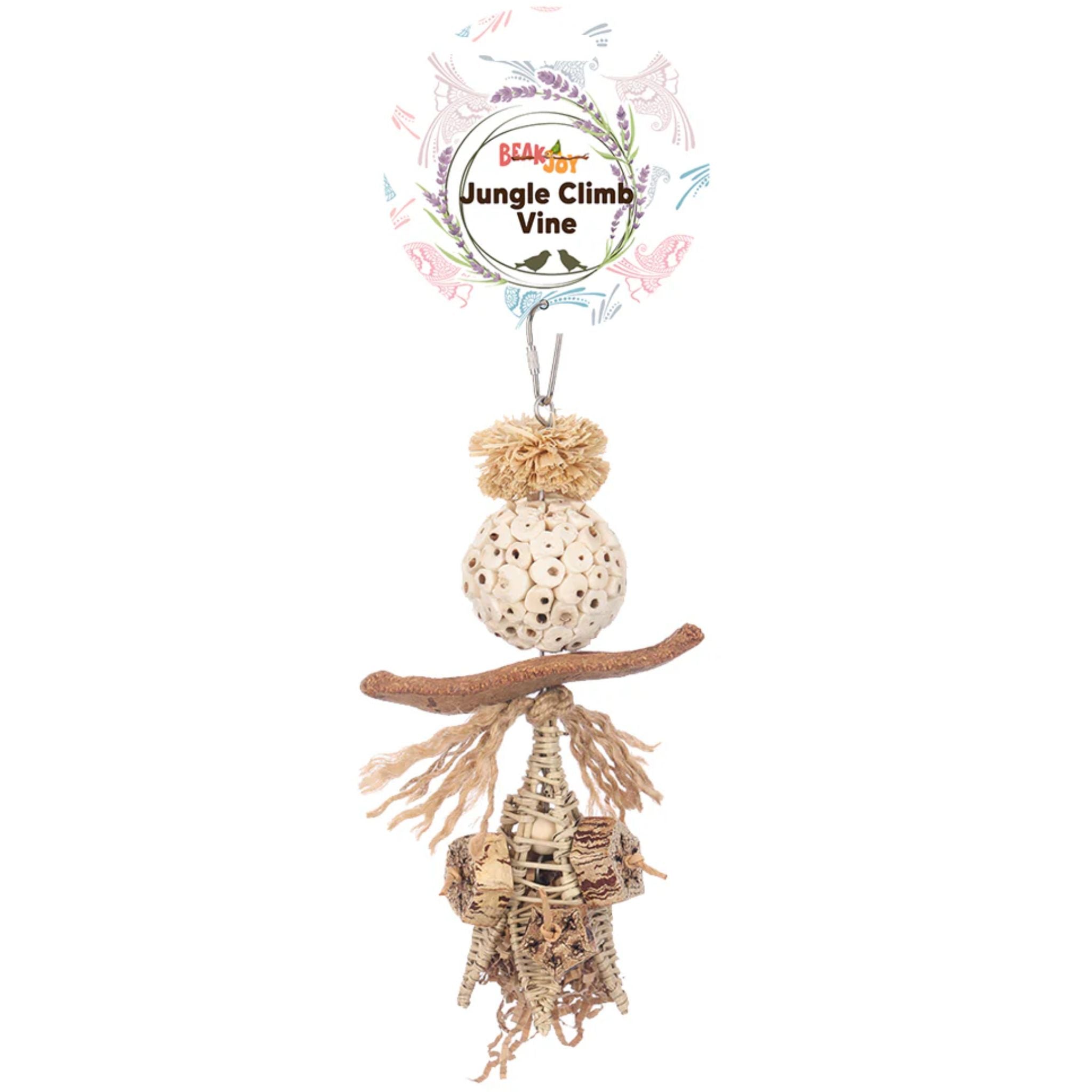
The range splits fairly neatly by what a bird actually does with it. Foraging pieces hide food and make the bird work for it: the Forage Chew Tower, Leaf Wrap Treat Toy, Pinecone Harvest, Sunny Sola Snack and the Peck & Count Board all reward persistence. Chew pieces are meant to be shredded — the Triple Peck Sola Chew, Woodland Stacker, Seagrass Nest Weaver and Natural Signature Blend Bird Toy sit here, and sola and seagrass come apart far faster than hardwood, so treat them as consumables. Climbing and perching pieces give the cage structure: the Bamboo Climber, Jungle Climb Vine, Cork Bark Bird Perch, Birdie Apple Wood Platform, Treetop Swing and the Birdie Jungle Gym in java wood. The Happy Wings Toy Box, Movie Peck Playset, Chirp 'N' Play Keyboard and Birdie’s Play & Snack Gym are larger sets that combine several of those jobs in one piece.
Choosing by material
Material tells you how long a toy lasts and which bird it suits. Java and apple wood are dense hardwoods that stand up to a cockatiel or a small parrot and work as perches as much as toys — the varying diameter of a natural branch also gives feet a change of grip, which a uniform dowel perch never does. Cork bark is softer and satisfying to strip, sitting somewhere between a perch and a chew. Bamboo, seagrass and sola are light, shreddable materials for smaller beaks and for foraging, where the whole point is that the bird destroys the wrapper to reach what is inside. Buy heavier for a strong chewer, lighter for a budgie or finch, and expect to replace the soft materials regularly.
Fitting Beak Joy pieces into a cage
Hang chew and foraging toys near a perch the bird already uses, and keep one clear route across the cage rather than filling the middle. Rotating two or three pieces in and out each week tends to hold a bird’s interest for longer than leaving everything in at once, and it gives you a chance to check ropes and timber for wear.