Enter your postcode or suburb to check delivery options and product availability in your area.
Use this bar to show information about your cookie policy.
Dog Grooming Brushes
50 products
Showing 49 - 50 of 50 products
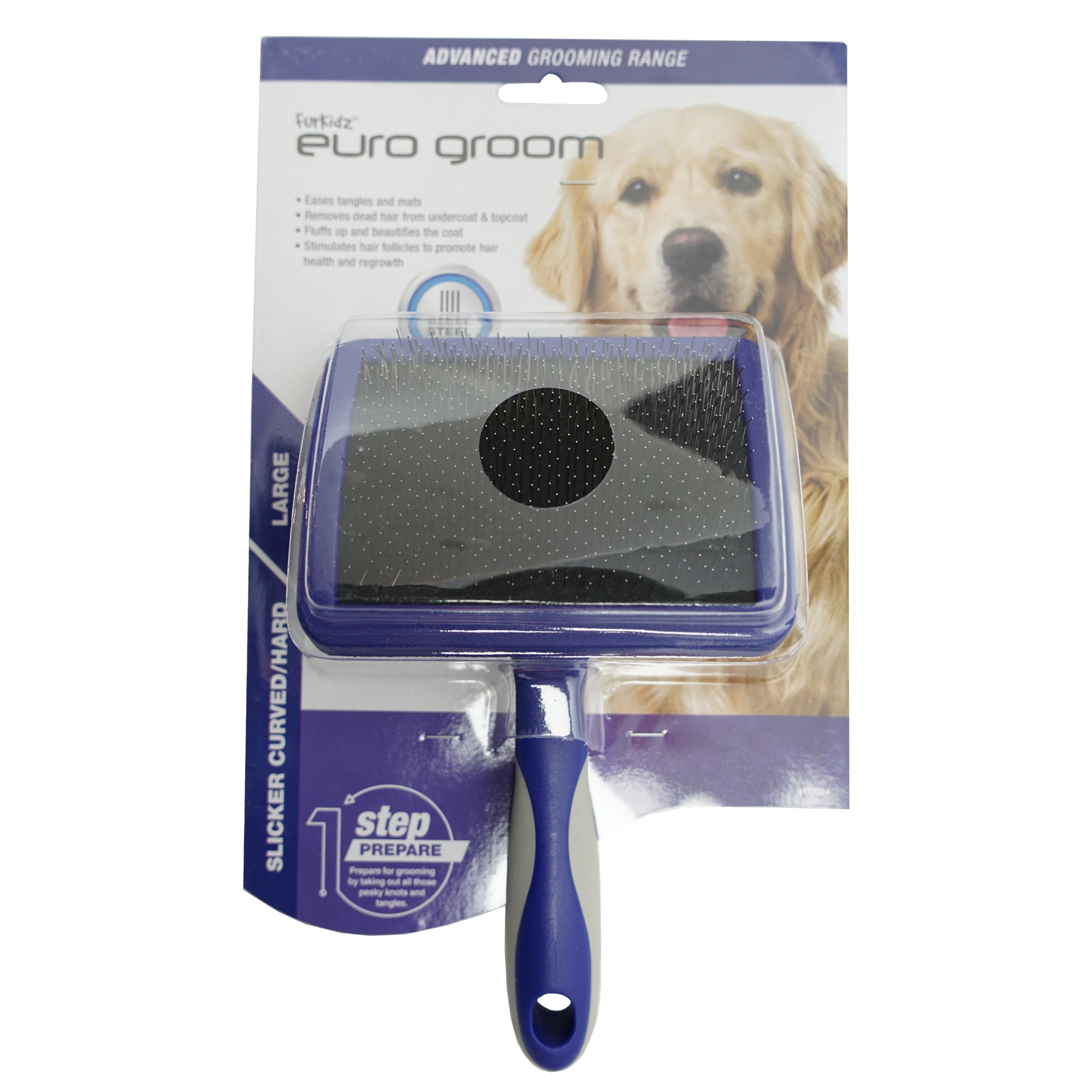
Brush type is decided by coat type, and using the wrong one is why some dogs hate being groomed. A slicker — fine bent wires on a flat pad — lifts dead undercoat and breaks up small mats, which makes it the workhorse for double and curly coats. It is also the brush most likely to scratch, so work with light pressure and stop when the skin pinks. A long pin brush has widely spaced pins that travel through a full drop coat to the skin without dragging the length; round-tipped pins are gentler on dogs that flinch. A boar bristle brush barely detangles at all — its job is distributing coat oil and finishing a short coat. Porcupine brushes mix nylon and bristle to do a bit of both, and anti-static versions matter on fine coats that fly away after drying.
Two habits worth adopting. Brush a mat out before the bath, not after — water tightens a mat into felt that usually has to be cut. And work in sections from the skin outwards rather than skimming the top; a coat can look brushed and still be matted underneath, which is how owners get surprised at the groomer.
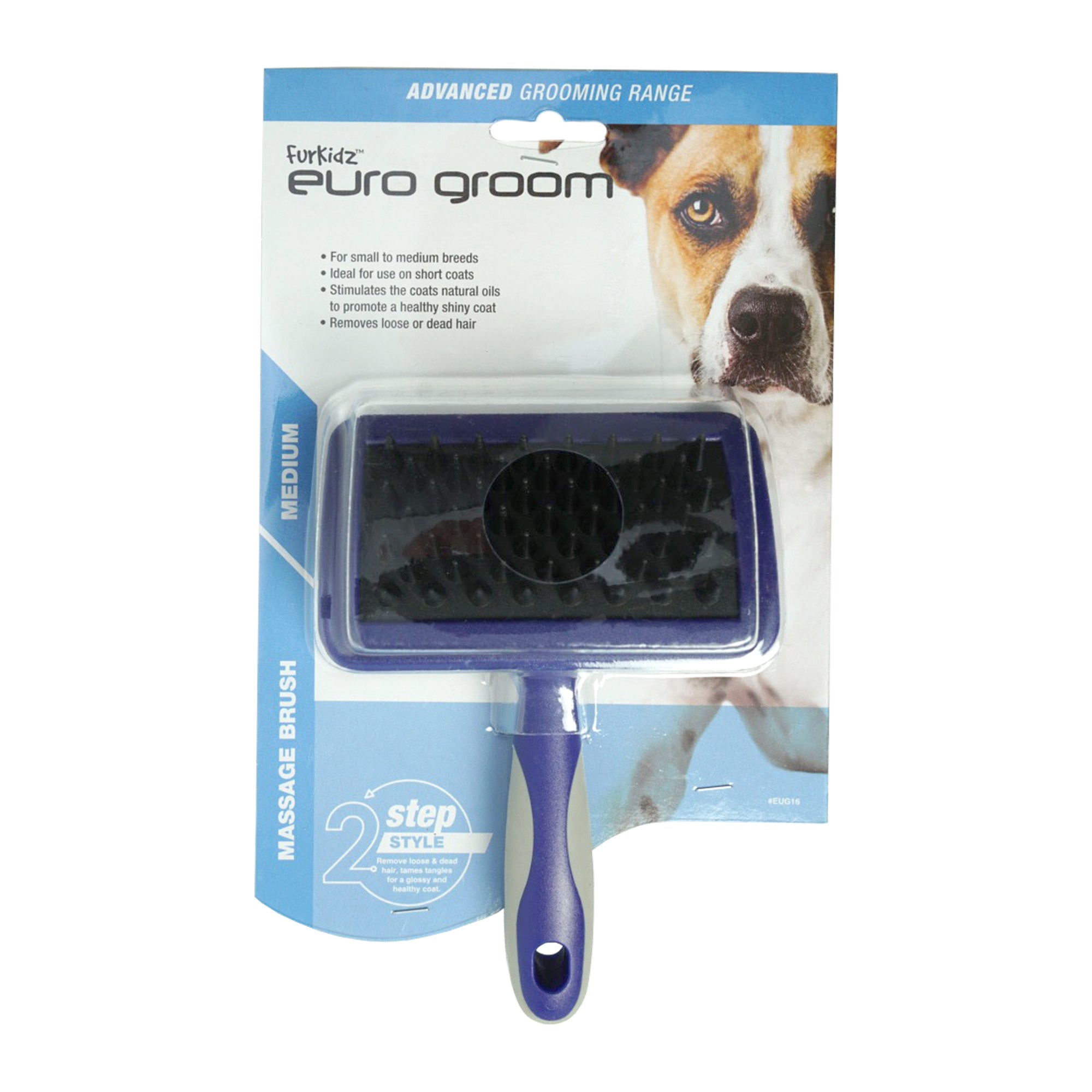
Brush size is about the dog, not your hand. A mini slicker is right for faces, feet and small breeds; a large head simply covers more ground on a big dog.
Choosing a slicker brush comes down to pin stiffness and head size. Soft slickers, such as the Plush Puppy Soft Slicker range, are gentler on thin skin and fine coats; hard-pin slickers, such as the Euro Groom Self Cleaning Slicker Hard Pin, move through thick or coarse coats more easily but need a lighter hand. Long pin slickers reach further into a long or double coat. Whichever grooming brush you choose, test the pins on the back of your hand first — if they scratch you, they will scratch the dog.