
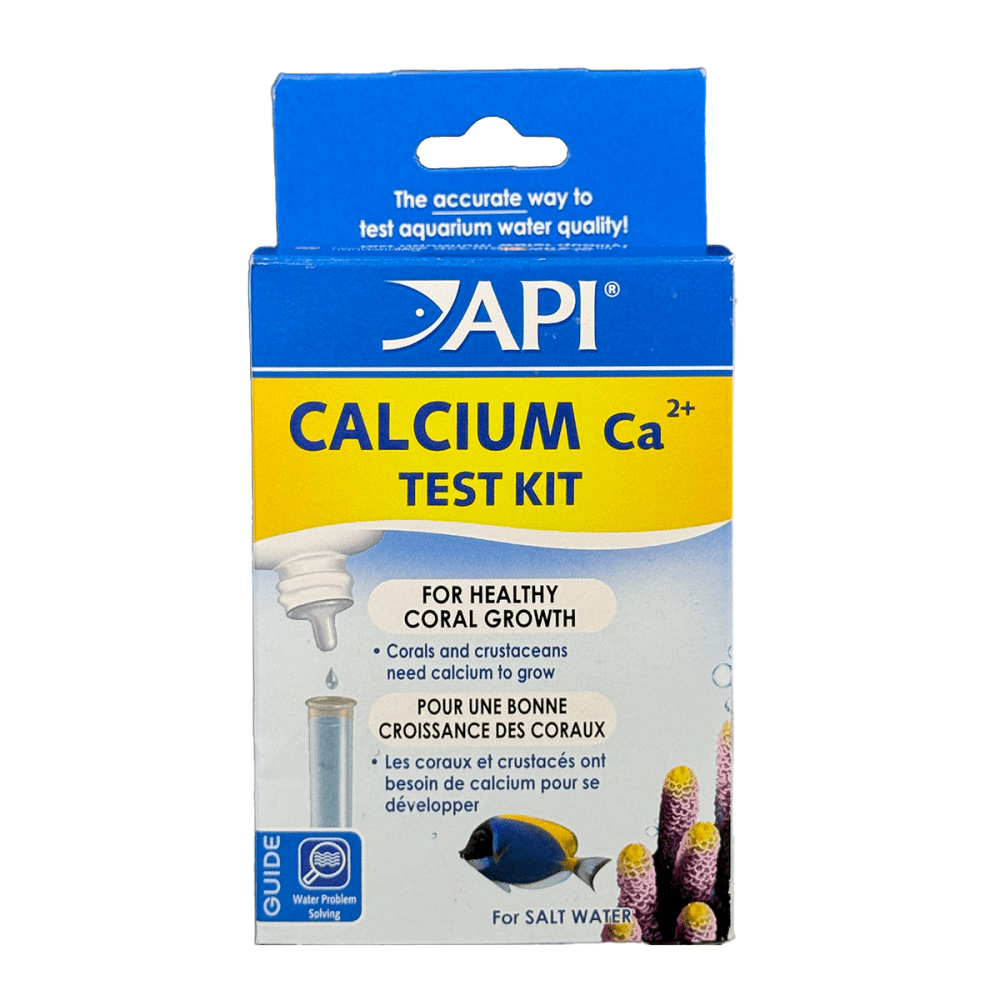

Corals, clams and coralline algae pull calcium out of the water as they grow, and a reef tank that is doing well is a reef tank that is running its calcium down. This kit measures from 20 mg/L upward; API puts the range to aim for at 400-500 mg/L (ppm).
It is a marine test — freshwater tanks have no use for it. API also makes the point that calcium on its own is only half the picture: carbonate hardness has to be tested alongside it, because dosing one without watching the other is what tips a reef out of balance.
What is in the kit
- 2 calcium test solutions
- 1 capped test tube
- Colour chart and instructions
How often
Weekly for a stocked reef tank.
Looking after the kit
Rinse each tube with tap water straight after use — dried reagent stains the tube and throws out the next reading. Never wash tubes with detergent; the residue is harmful if it goes back into the tank. Shake the reagent bottles firmly, but invert the capped tube gently.
Carbonate hardness is included in the Reef Master Test Kit, which also covers phosphate and nitrate.
More Aquarium Test Kits
-
 API 5 In 1 Freshwater And Saltwater Aquarium Test Strips
-
 API Ammonia Freshwater And Saltwater Aquarium Test Strips
-
 API Quick Testing Strips PH
-
 API Ammonia Freshwater And Saltwater Aquarium Test Kit
Out of stock
-
 API Nitrite Freshwater And Saltwater Aquarium Test Kit
-
 API Nitrate Freshwater And Saltwater Aquarium Test Kit
-
 API Phosphate Freshwater And Saltwater Aquarium Test Kit
-
 API Copper Freshwater And Saltwater Aquarium Test Kit
-
 API Test Tubes


