


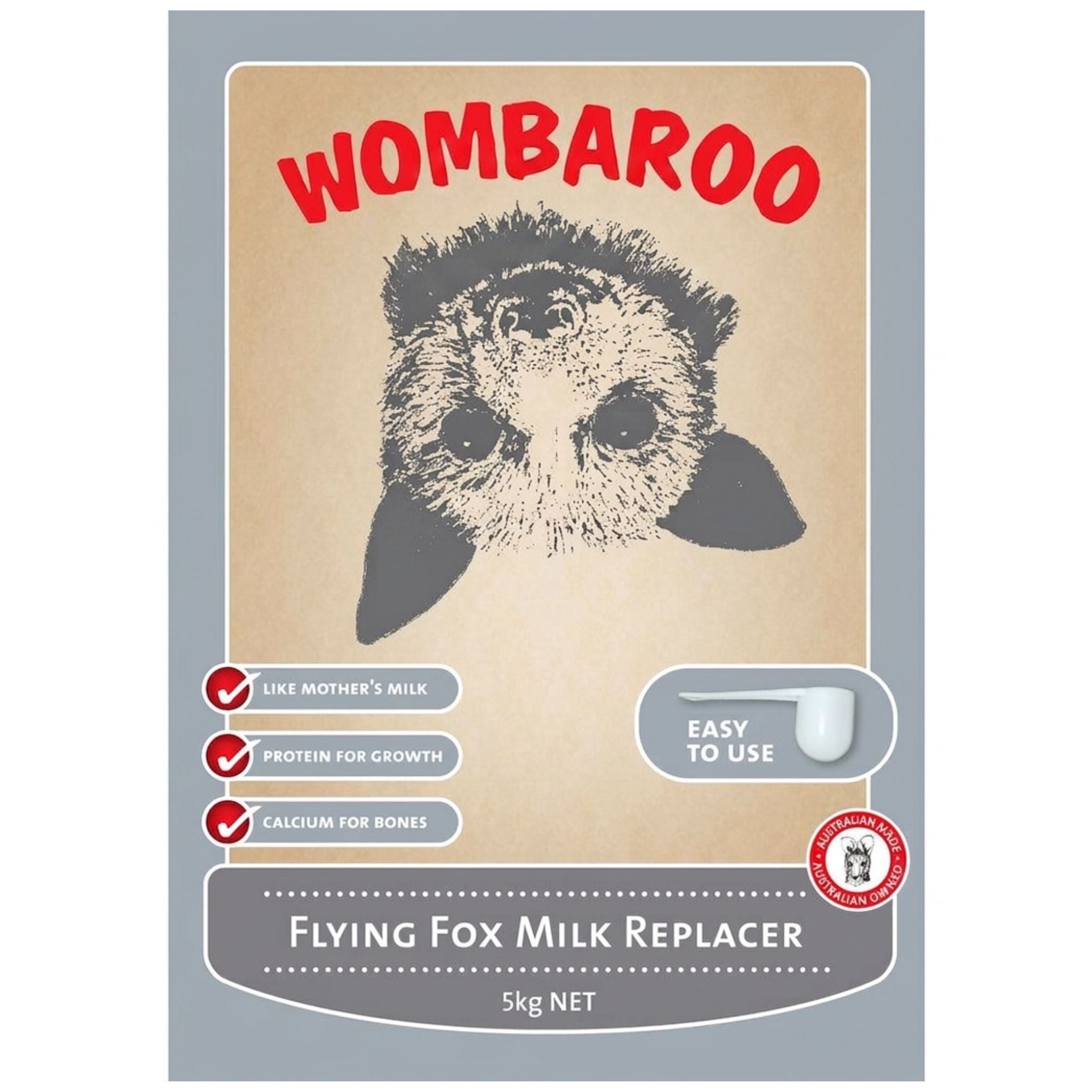


Wombaroo Flying Fox Milk Replacer is a milk substitute for orphaned flying fox and fruit bat pups, and it is a different formula from Wombaroo's microbat powder — far lower in fat at 15%, with 27% protein and 18 MJ/kg. Alongside milk solids, whey protein and casein it carries taurine, added calcium for skeletal growth, and stabilised Vitamin C for skin and joints, which is the feature that sets it apart from the rest of the range. Fourteen grams of powder makes 100 millilitres of milk, so the 1kg pack PeekAPaw currently has available makes roughly seven litres. Wombaroo's Teat F is designed for flying foxes if you need a matching teat. A flying fox pup is best placed with a licensed wildlife carer — contact a rescue group before you start hand-rearing.
Key Features
- Like Mother's Milk – Formulated to match the composition of flying fox milk.
- Protein for Growth – Supports healthy development in young pups.
- Calcium for Bones – Promotes strong skeletal growth.
- Stabilised Vitamin C – For healthy skin and joints.
Ingredients
Whole milk solids, whey protein, casein, glucose, vegetable oils, omega-3 & 6 fatty acids, taurine, stabilised Vitamin C, vitamins A, B1, B2, B3, B5, B6, B9, B12, D3, E, K, biotin, choline, inositol, calcium, phosphorus, potassium, sodium, magnesium, zinc, iron, manganese, copper, iodine, selenium.
Typical Analysis
| Protein | 27% |
| Fat | 15% |
| Ash | 6% |
| Moisture | 4% |
| Energy (ME) | 18 MJ/kg |
Making Up Milk
To make 100 mL of milk: Mix 14 g of powder (2 scoops) with 90 mL of warm water.
To make 1 litre of milk: Mix 140 g of powder with 900 mL of warm water.
Add about half the water to the powder first and mix to a paste. Then add the remaining water and mix thoroughly. Pre-boil the water to ensure it is sterilised. If the water is too hot, it can cause the milk to curdle. If it is too cold, it will be difficult to disperse the powder. An electric whisk can be used for mixing larger quantities.
Milk can be stored in the fridge for a day or frozen for up to two weeks. It is useful to make up milk in larger quantities and store it frozen in small portions (e.g. ice cube trays), so that the required daily feed volumes can be easily thawed out. Once thawed, discard any unused milk and wash feeding utensils thoroughly.


